
Attic Mold Removal in Seattle, WA
Finding possible mold in an attic is stressful. Moisture damage, visible staining or a persistent musty odor should prompt a careful, step-by-step approach: document the condition, identify likely moisture drivers, and agree a written remediation plan before any destructive work begins.
Encore Construction provides a free initial restoration assessment that evaluates accessible attic areas, moisture readings and visible damage. After you authorize the written scope, we proceed with the agreed mold remediation and restoration steps.
Request an assessment Call 425-548-4877
Free assessment · Family-owned since 2015 · Emergency help 24/7

Signs of mold in your attic
Discoloration, staining or an earthy, musty odor are signs that need assessment. Color and photos alone cannot confirm active growth or species. A professional assessment looks at moisture, materials and attic systems to form a remediation plan.
Discoloration on wood or sheathing
Dark or irregular stains on roof sheathing, rafter undersides or framing can indicate past or present moisture and possible mold growth. An assessment helps distinguish moisture damage, suspected growth and staining; appearance alone may not settle the question.
Musty odor in living spaces
A persistent musty smell near ceilings or vents may point to damp materials or possible mold. Odor alone cannot locate the source or identify a spore type; accessible areas and moisture conditions need assessment.
Moisture or wet insulation
Wet, compacted or matted insulation is a reliable indicator that moisture has been present. Insulation condition influences decisions about removal, replacement or drying.
Findings from a home inspection
If an inspector reports stained sheathing, compromised flashing or roof anomalies, those findings are a useful starting point for a targeted attic mold remediation assessment.
Why mold grows in the attic
Mold can grow where moisture persists and suitable nutrients are present, including on wood and in dust on building materials. Roof leaks, indoor moisture and attic design can all affect the conditions for growth.
Roof leaks and water entry
Damaged flashing, missing shingles or roof penetrations allow bulk water into the attic. Water on roof sheathing or rafters is an obvious moisture source that must be identified and addressed with repairs.
Exhaust and condensation
A bathroom fan venting into the attic can carry moist air into the attic instead of outdoors. When warm, moist air reaches cold roof sheathing on the underside of the roof, condensation can create conditions for mold growth.
Blocked vents and poor airflow
In a vented attic, blocked soffit intake or restricted roof vents can contribute to moisture problems. The assessment should consider leaks, indoor air leakage and the attic’s design before a repair is selected.
Professional attic mold removal and remediation
The remediation process depends on the extent of the mold, affected materials and safe access. Here is what we discuss before work begins.
Assessment and documentation
We start with a free initial restoration assessment. The project manager documents history, inspects accessible attic areas, records moisture readings, takes photos and measurements, and prepares a written scope. No destructive work happens before you authorize the scope.
Agree scope and protect the work area
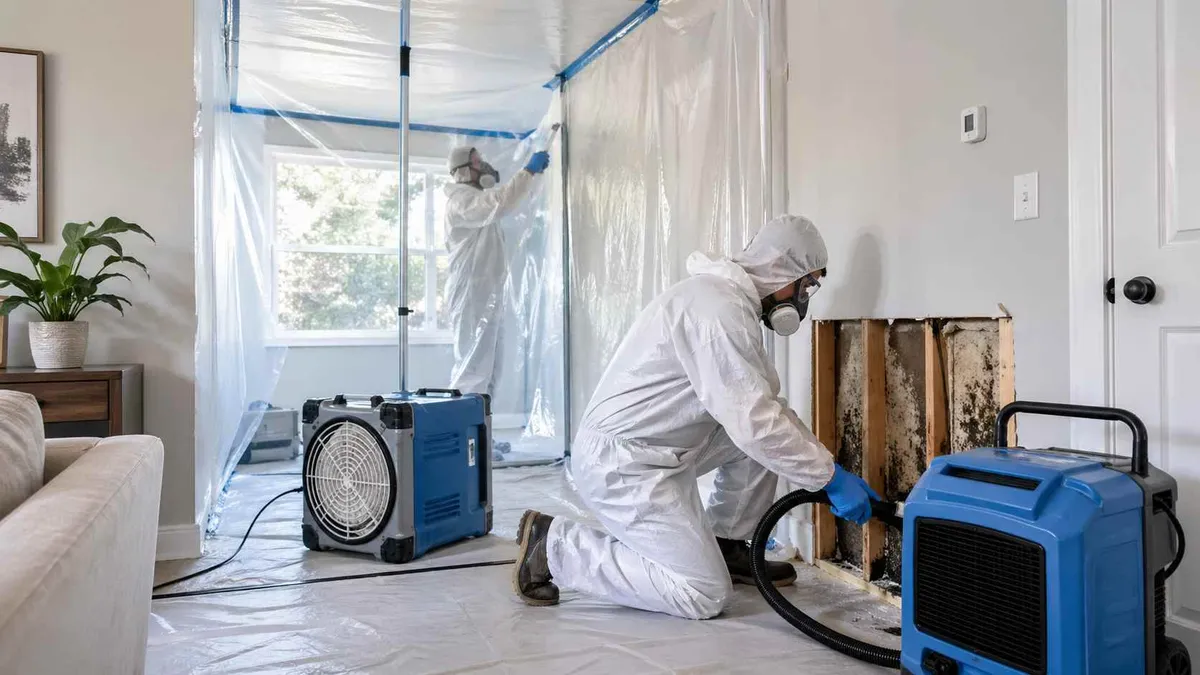
The written estimate describes containment strategies, proposed removals and cleaning methods, and any required coordination with other trades. We discuss protection for the living space and contents prior to starting work.
Removal and controlled cleaning
Professional remediation may include removing unsalvageable porous materials, careful cleaning of salvageable surfaces and source-focused work inside contained areas. HEPA filtration and negative air pressure may be considered as part of the site-specific plan to limit disturbance of mold spores. The proposed approach depends on access, materials and conditions.
Drying, follow-up and repairs discussion
Drying and monitoring are integral. The project manager reviews moisture trends with you and discusses repairs that correct the moisture source—roofing, ventilation, exhaust rerouting or insulation adjustments—before final sign-off. We do not begin reconstruction or additional trades without authorization.
Attic insulation, wood and mold stains
Attic materials respond differently to moisture and mold. Decisions about removal, salvage or cleaning depend on material type, extent of contamination and structural condition. Cosmetic staining alone does not determine the full scope.
| What we find | Decision to discuss |
|---|---|
| Roof sheathing and rafters | The condition of attic sheathing and rafters helps determine whether cleaning and drying are appropriate or whether damaged wood needs replacement. Suspected structural damage may require a separate specialist; the written scope identifies the next steps. |
| Wet or contaminated insulation | Insulation that is saturated, compacted or visibly contaminated is often removed and replaced. Drying and in-place cleaning are only considered when the material and moisture condition make those methods appropriate. |
| Remaining stains on surfaces | Stains can be cosmetic or a sign of growth history. Treatment options vary; removal may not erase discoloration. The project scope will identify what is expected and what remedies are feasible. |
What affects attic mold remediation cost?
Costs vary by damage complexity and the actions needed to address moisture and restore the attic. We provide a free assessment and a written estimate before any work begins.
- Affected area and materials: the square footage and whether insulation, sheathing or framing require removal or replacement.
- Safe access and containment: attic configurations that require special access or containment measures affect the scope.
- Removal, disposal and drying: the volume of contaminated materials and the level of drying and dehumidification needed.
- Repairs and source correction: roof repairs, vent rerouting, insulation replacement or independent testing, if separately required, will influence cost and are discussed in the estimate.
Insurance coverage depends on your policy, the cause of moisture and your insurer’s decision. We document conditions to support a claim but do not guarantee insurer payment or coverage.
Attic ventilation: help prevent mold growth
Controlling moisture and maintaining airflow reduce the chance of repeat problems. Simple checks can make a meaningful difference.
Resolve leaks promptly
Repair roof penetrations, flashing and plumbing leaks quickly to eliminate bulk water as a moisture source.
Exhaust fans to the exterior
Ensure bathroom and dryer exhausts terminate outside the building envelope rather than into the attic; verify connections with a qualified trade if needed.
Clear ventilation paths
Keep soffit intake and ridge vents free from blockage and confirm insulation does not obstruct airflow in vented attics.
Watch for recurring dampness
Monitor accessible areas after repairs and ask a qualified professional to inspect your attic if access is unsafe. New stains, odors or insulation changes warrant follow-up. Read the EPA’s mold guidance for more information.
Attic mold remediation services in Seattle
Encore Construction is a local family-owned restoration company established in 2015. Our project managers coordinate documentation, mitigation and reconstruction as agreed in the written scope, and they keep homeowners and insurers informed through photos, measurements and reports.
For Seattle homeowners we maintain an additional office at 221 1st Ave W STE 200, Seattle, WA 98119. Our main base and storage are in Arlington. Emergency help is available 24/7, 365 days a year. Call to discuss the situation and availability.
Attic mold removal questions
Can I clean mold myself?
Small, contained areas on non-porous surfaces can sometimes be cleaned by homeowners following safety precautions, but attic work often involves hidden moisture, insulation and overhead hazards. For significant or widespread problems, a professional assessment is safer and helps document conditions for insurance.
Is “black mold” identifiable by color?
No. Color or staining does not reliably identify species or toxicity. The term “black mold” is commonly used in conversation, but visual appearance alone cannot determine health risk or species.
Does insulation always need removal?
Not always. If insulation is wet, compacted or contaminated, removal and replacement are often recommended. Dry, intact insulation that was not exposed to contamination may be left in place. The decision is made after inspection and moisture assessment.
Will mold come back after remediation?
Professional remediation reduces or removes existing growth, but without correcting the underlying moisture source—leaks, poor ventilation or exhaust problems—conditions that favor mold can return. We discuss moisture-source correction and preventative measures in the written scope.
How long does professional remediation take?
Timelines depend on the affected area, materials and repairs needed to address moisture. After the assessment, we provide a projected schedule with the estimate and update it if the agreed work changes.
Is mold testing included?
The free initial restoration assessment is not a laboratory mold test. If independent testing or clearance is needed, ask who will provide it, what it covers and whether it is included in the written estimate. Do not assume that sampling is part of the service. Encore does not perform medical diagnosis; consult a healthcare professional for health concerns.
Request an attic assessment
To schedule a free initial restoration assessment, call 425-548-4877 or Request an assessment. The project manager will review your attic history, inspect accessible areas, take moisture readings and prepare a written scope for your approval.