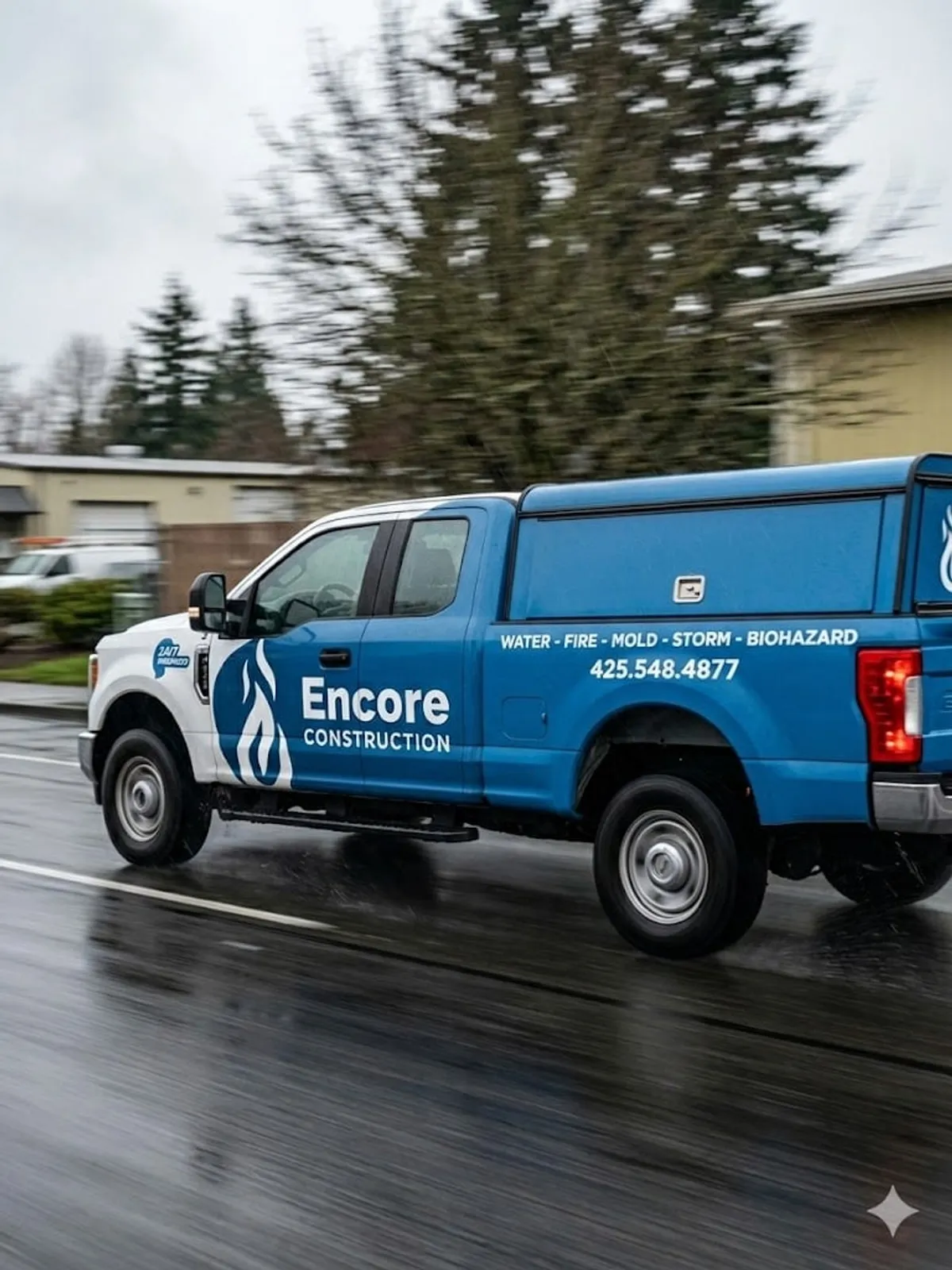
After a burst pipe, plumbing leak, storm, flood, or sewage backup, moisture can remain in places that are easy to miss. If it's safe to do so, stop the water source before cleanup begins and have the affected areas assessed. At Encore, we provide residential and commercial water damage restoration in Seattle and throughout Snohomish, Island, Skagit, King, and Whatcom counties. Our work includes water extraction, structural drying, cleanup, documentation, and restoration.
Standing water and electricity are a dangerous combination. Stay out of areas where water may have reached electrical outlets, appliances, or wiring. If you can safely turn off the power from a dry location, do so. If not, leave the area and contact a professional water damage restoration expert.
02
Stop the Water Source if It Is Safe
If a water leak is still active and the shutoff is safely accessible, stop the flow as soon as you can. Keep people and pets away from contaminated water. Sewage cleanup and flood water require extra caution.
03
Document and Call for Help
From a safe area, photograph visible damage and note the rooms and materials affected. Contact a restoration team and work directly with your insurance company so the water loss can be documented before flood damage cleanup and restoration moves forward.
Types of Water Damage
Cleanup for Leaks, Floods, and Contaminated Water
The source, the materials affected, and how long the moisture has been present all shape the restoration plan. Encore assesses the damage to decide what remediation services are needed.
Burst Pipes & Plumbing Leaks
Water can move through walls, ceilings, cabinets, flooring, and insulation before the extent of the damage becomes visible. Moisture mapping helps identify areas that may not show obvious signs of water damage.
Floodwater and stormwater may carry soil and other contaminants. Depending on the type of water and what it has come into contact with, the cleanup may involve specialized removal services.
Appliance & Supply-Line Failures
A leaking water heater, washing machine, refrigerator, or supply line can send water beneath finished floors and into adjoining rooms. The damage may extend beyond what is visible on the surface.
Sewage Backups
Contaminated water requires controlled removal and appropriate cleaning. Avoid direct contact and keep the affected space isolated until a restoration specialist can determine the appropriate next steps.
Water Cleanup
Remove Standing Water and Stop Further Damage
Standing water can soak into different parts of the property and make the problem worse. The first stage of dealing with water damage is to identify the source, check where the water traveled, and remove it from accessible surfaces and spaces. We use commercial extraction equipment selected for the conditions at the property. Once the water is extracted, the technician checks for moisture that may remain beneath surfaces or inside building materials. Removing moisture also helps limit conditions that can contribute to mold growth. Items that cannot be safely cleaned or dried may need to be removed, while salvageable areas move into the drying process.
A room can look dry while moisture remains in drywall, wood framing, insulation, or flooring. Moisture meters and, where useful, thermal imaging help locate damp areas and establish a drying plan. Air movers help moisture evaporate, while commercial dehumidifiers remove it from the air. The equipment used and where it is placed depend on the amount of moisture, airflow, temperature, and how long the water has been present. Drying is an important part of the water restoration process. Encore monitors moisture levels throughout the restoration and adjusts the equipment based on what the readings show. Proper drying helps prevent further deterioration. If moisture has led to mold, additional mold remediation may be needed.
Restoration & Cleaning
Clean the Affected Area and Prepare It for Restoration Work
Not every water loss can be cleaned the same way. We look at where the water came from and what it touched before deciding what can be cleaned and what needs to be removed. Items like carpet pad, insulation, and drywall may need to come out if they cannot be safely dried and restored. The water damage restoration process can include debris removal, cleaning and sanitizing affected surfaces as appropriate, and addressing odors. Once the space is dry and the cleanup is complete, we can move forward with the property damage restoration solutions needed to restore the affected areas.
Our emergency water removal support team is available around the clock, every day of the year, to help protect your home or business. Call us to discuss the loss and decide what to do next.
Extraction Through Build-Back
From water removal and drying to cleanup, repairs, and reconstruction, Encore can handle full restoration work under one roof. This keeps the comprehensive residential or commercial restoration process moving without handing the project between unrelated contractors.
Registered Contractor
Encore Construction LLC is registered in WA as contractor ENCORCL857K6 and can coordinate the construction work that may follow water remediation.
A Documented Recovery Plan
We explain the affected areas, proposed work, and records needed to keep the restoration project clear.
Once the area is safe, we remove pooled water and check the affected areas to help prevent further damage to your home and determine what needs to be cleaned, dried, or removed.
03
Drying & Monitoring
We monitor moisture levels throughout the drying process and adjust the equipment as needed. This helps make sure the affected areas are ready for the next stage of residential restoration.
04
Cleanup & Repairs
After drying is complete, we move into cleanup and any necessary repairs or reconstruction. Our restoration services in Seattle support you every step of the way.
Insurance & Reconstruction
Document the Loss and Complete the Build-Back
A water loss can involve both emergency mitigation and later construction. Encore keeps these stages coordinated and provides records that help the Seattle property owner, adjuster, and project team understand the work performed.
Insurance Documentation
Our team documents the damage, communicates the scope of work, prepares estimates, and coordinates with the insurance adjuster. Direct billing to the insurance company may be available when the claim and payment arrangement allow it. Coverage, deductibles, exclusions, and customer responsibility are determined by the policy, insurer, and contract.
Repair & Reconstruction
Once the affected area is ready for build-back, we can coordinate the required construction work. The exact scope is based on the property conditions and approved work.
24/7 Emergency Help
Start Your Water Damage Recovery Plan
Discover water damage in Seattle, WA? Call Encore to discuss the situation and plan the next step. We provide water damage restoration across 56 confirmed communities in King, Snohomish, Island, Skagit, and Whatcom counties. Our team is available 24/7, every day of the year. Arrival arrangements depend on your location, access, current conditions, and crew availability.
Answers About Cleanup, Drying, Insurance, and Repairs
What does water damage restoration include?
Commercial and residential restoration provides owners with services that include inspection, water extraction, removal of materials that cannot be safely restored, structural drying, moisture monitoring, cleanup, sanitizing as appropriate, odor control, documentation, and repair or reconstruction. The exact service depends on the water source and property conditions.
How quickly should water damage cleanup start?
Begin by addressing safety and stopping the source only when it's safe to do so. Get the water removal help as soon as possible, because moisture can continue moving into porous materials and concealed areas. Restoration is available 24/7/365 through Encore.
How long does it take to dry a water-damaged property?
There is no single drying time for every property. The schedule depends on the materials affected, moisture levels, airflow, temperature, the water source, and how long the area was wet. Moisture readings are used to track the drying process and determine when the documented goals have been reached.
What restoration services does Encore provide?
In addition to water damage services, Encore provides fire damage restoration, mold damage repair, content restoration, pack-out and storage, and full reconstruction. Our services include cleaning and deodorization, structural repairs, and restoring damaged belongings. We can also coordinate the repair and reconstruction work that may follow the initial restoration process.
Does homeowners insurance cover water damage?
Coverage varies by policy and cause of loss. The insurance company decides what is covered, which exclusions apply, and the amount owed by the policyholder. We can document the damage, prepare the work scope, and communicate with the adjuster.
How much does water damage restoration cost?
Every water damage situation is different, so there is no fixed price. The cost depends on what caused the damage, how far the water has spread, which materials are affected, and what equipment, cleanup, contents handling, or repairs are needed. Specialists inspect the property and prepare a documented estimate based on the actual conditions before the project begins.
Where does Encore provide water restoration services?
We serve Seattle and confirmed communities across Snohomish, Island, Skagit, King, and Whatcom counties, including Arlington, Everett, Mountlake Terrace, Bellevue, Mount Vernon, Oak Harbor, and Bellingham. The complete current service-area list appears below.
Can wet carpet, drywall, or flooring be saved?
Sometimes, but the decision depends on the water source, contamination, saturation, material condition, and time exposed. Cleanable and dryable materials may be restored; materials that cannot be safely cleaned or dried may need removal. An on-site assessment is required.
Service Areas
24/7 Water Damage Restoration in Seattle and Surrounding Communities
Serving Seattle, WA, and 56 confirmed communities across Snohomish, Island, Skagit, King, and Whatcom counties. Contact Encore with your property address to discuss access, service availability, and the next step.