
Flood Damage Restoration in Seattle, WA
Flood damage can leave moisture and contamination behind after visible water is gone. Encore Construction provides flood damage restoration services in Seattle for homes and businesses: damage assessment, water removal, cleanup, structural drying and agreed water damage repair.
Request an assessment Call 425-548-4877
Family-owned since 2015 • Free initial restoration assessment and estimate • Emergency service 24/7, 365 days a year.

The type of water changes the cleanup plan
Indoor plumbing or appliance failure
Flood damage from burst pipes, failed water heaters or appliance leaks needs a source assessment. A broken potable-water supply line differs from an appliance drain or overflow; even initially clean water can become contaminated after contact with materials. The team assesses the source, time elapsed and affected materials before choosing extraction, drying and contents-handling methods. Do not assume that water from an appliance is clean.
Outside flood water
Flooding from outside—overnight storm runoff, overland flow, or rising creeks—may carry soil, debris and biological contaminants. Appearance alone does not reveal contamination; professional assessment identifies hazards and required containment, handling and disposal.
Sewage cleanup or unknown water sources
Sewage and unknown waters require conservative handling. These conditions often demand different personal protective equipment, disposal and content decisions. Never assume safety by sight or smell—contractors evaluate contamination before cleanup.
For sewage cleanup or water from an unknown source, discuss the affected rooms and any prior cleanup attempts before anyone begins work. Professional cleanup decisions depend on contamination and material condition; moving air or covering damage without resolving those conditions can leave problems untreated.
Flood cleanup and restoration: what the work can include
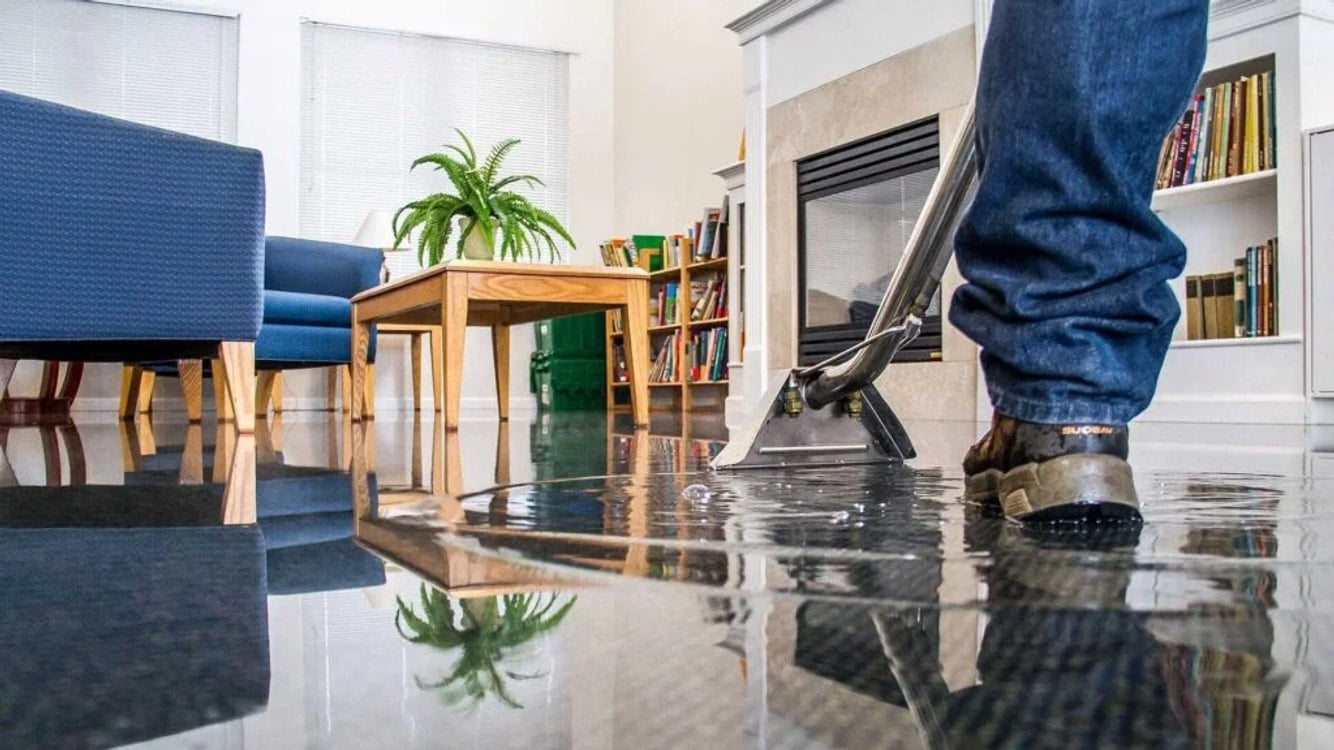
Emergency water removal
Emergency water extraction removes pooled water to help prevent further damage. Water removal services must account for depth, contamination and safe equipment access. A qualified electrician must assess wet electrical systems before work proceeds in an area with electrical hazards.
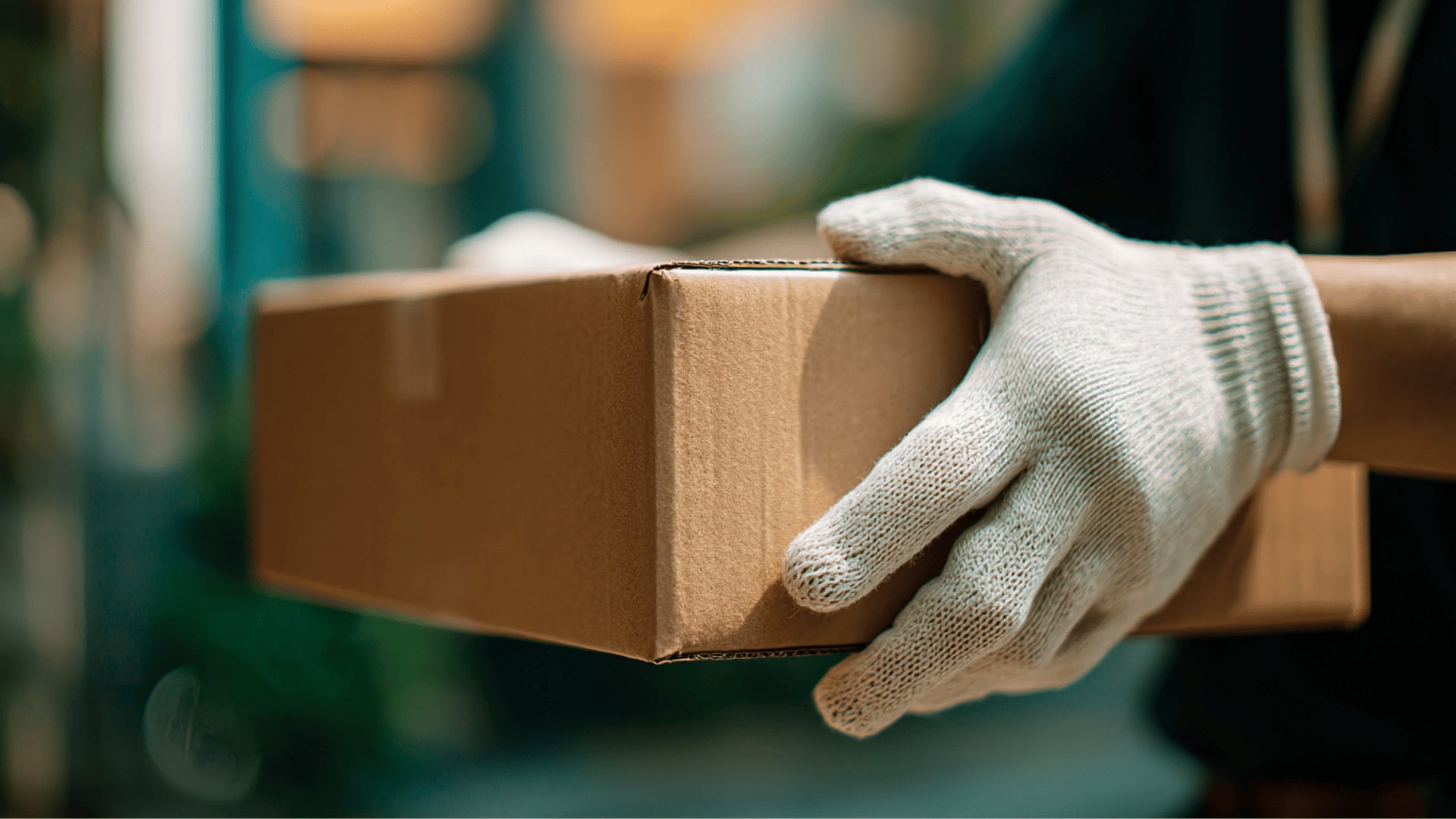
Affected materials and contents decisions
Technicians inspect walls, insulation, flooring and contents. Decisions to dry, clean, store or remove materials are site-specific and based on moisture readings, contamination and material condition; not all materials can be saved.

Cleaning and structural drying
Controlled airflow, dehumidification and moisture monitoring address retained moisture in cavities and building materials. The drying plan follows assessment of contamination, materials and safe access.

Agreed repairs and reconstruction
Reconstruction tasks repair or replace damaged building materials after agreed drying and scope. Encore offers mitigation, contents handling/storage and reconstruction within one company process, though some trades may be required separately.
The flood damage restoration process
1. Flood damage assessment
A project manager asks about the loss history, examines accessible areas, and uses moisture readings to detect hidden moisture. Photographs, measurements and notes document the extent of the damage and support a proposed scope. The free initial assessment helps you understand priorities before authorizing work.
2. Agree scope and authorization
Work begins after you authorize the recommended scope. The written estimate outlines mitigation, contents handling and reconstruction options. Agreed authorization starts scheduling and resource allocation.
3. Remove water, clean and dry
Water extraction removes excess water. Technicians then carry out the agreed cleaning and structural drying, adjusting controlled airflow and dehumidifiers as readings change. Contamination affects the sequence, protective measures and disposal.
4. Moisture review and repair planning
Technicians review moisture readings and photographs to confirm drying endpoints and plan reconstruction. Documentation of photos and readings supports insurance claims, but insurer decisions determine coverage.
For commercial flood damage, discuss tenant access, operating hours, equipment placement and work-area restrictions with the project manager. These details shape the restoration plan; continued operation depends on conditions.
Flood damage repair: dry, remove or rebuild?
| Affected area | What the assessment checks | Decision to agree |
|---|---|---|
| Walls and insulation | Moisture behind drywall, contamination level, structural framing condition. | Remove and discard drywall and insulation contaminated by sewage or floodwater. Assess other wall materials for contamination, moisture and physical damage before deciding what can be retained. |
| Floors and subfloor | Surface water, subfloor moisture, adhesive failures and finish condition. | Agree whether the flooring and underlying layers can be retained, accessed for drying, or removed. The decision depends on material condition and contamination. |
| Furniture and contents | Type of material, contamination, ability to clean and dry, sentimental or business value. | Contents are evaluated for on-site cleaning, off-site storage/cleaning, or disposal when contaminated beyond practical restoration. |
Decisions are made with documented moisture readings and photographs; no single rule applies to every material or situation.
The aim is to restore your property to its agreed pre-loss condition where feasible. Damaged materials, contamination and structural damage may require replacement rather than cleaning. Your estimate should distinguish cleanup services from structural repairs, finishes and contents work so that cost and timing are clear.
The cost of water damage restoration and recovery time
Extent and hidden moisture
More widespread damage and moisture behind walls or under subfloors increase labor, equipment and monitoring time.
Contamination and disposal
Sewage or heavily contaminated floodwater requires special handling, disposal and cleaning protocols that add complexity and cost.
Access and equipment duration
Commercial sites or restricted access can prolong equipment staging and active drying timelines; larger spaces need more dehumidification and monitoring.
Repair and contents scope
Reconstruction extent, materials selected and contents restoration or storage needs change total project pricing and schedule. Encore provides a free assessment and written scope to outline these elements.
For ordinary water losses, Encore often sees 3–5 days of active drying. That is not a completion estimate for contaminated flooding or reconstruction: material condition, moisture levels and the agreed scope determine the schedule. Photos, readings and work records help you navigate the insurance claims process; your insurer decides coverage.
Before water damage cleanup begins
Avoid flooded electrical areas
Standing water and electrical hazards require safe access. Never enter water to reach a breaker or use electrical equipment in water; consult CDC guidance for electrical hazards: CDC electrical hazards.
Keep people and pets away from unknown water
Unknown or contaminated flood water can be hazardous. Keep occupants and pets clear until professionals assess contamination and safety.
Document safely
Photograph damage from safe locations to support claims and planning, but do not enter structurally unsafe areas to take photos.
Call with source and access details
Tell us the suspected source, where water is visible and any access restrictions. Wait for a professional safety assessment before using pumps, fans or cleaning products in the affected area.
For guidance on protecting indoor air and health after flooding, see EPA: Flood cleanup and indoor air.
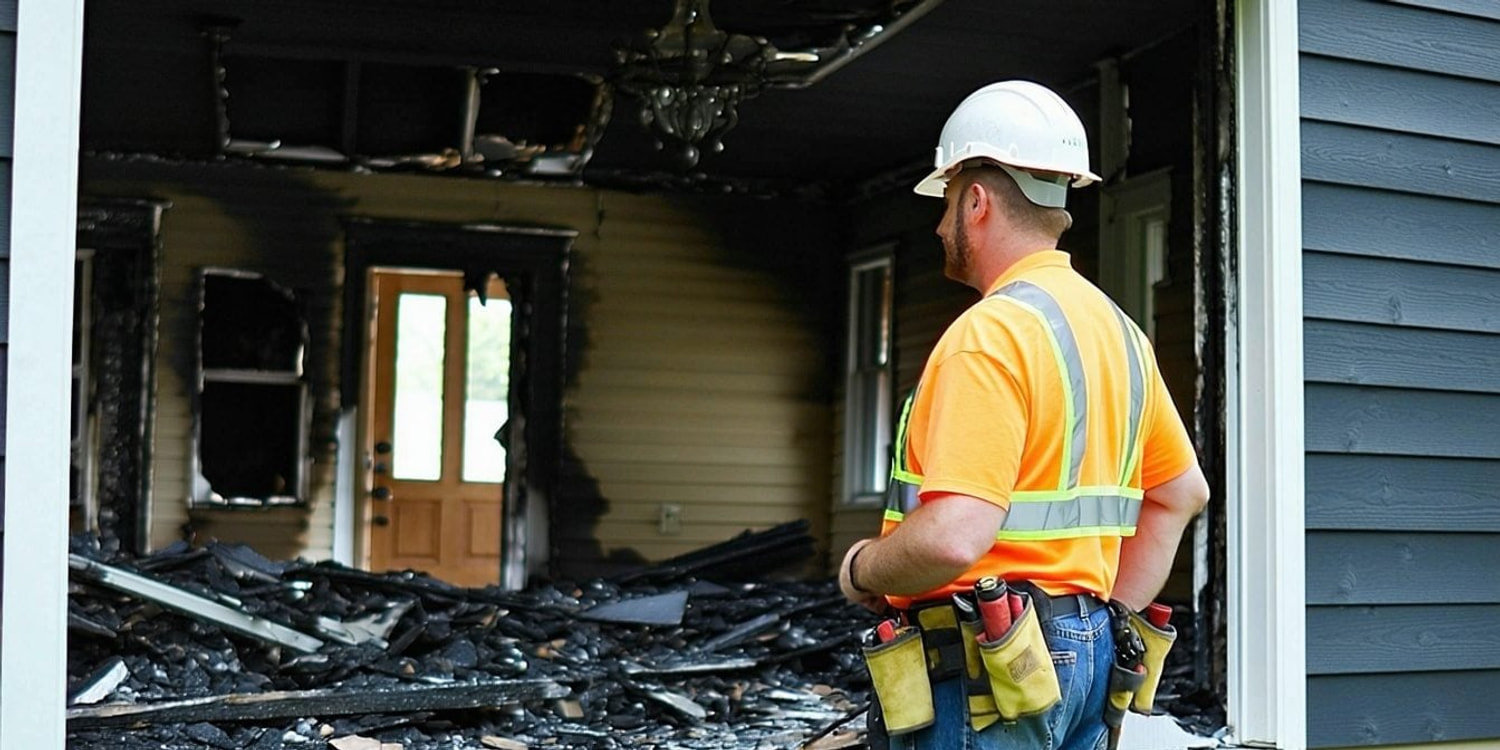
Seattle water damage restoration support, from assessment to repairs
Encore Construction has provided residential and commercial restoration services since 2015. Our water damage restoration service in Seattle connects mitigation, contents handling and reconstruction through a project manager, with an agreed scope for each stage.
Emergency service is available 24/7, 365 days a year. Free initial restoration assessment and estimate are provided to help property owners make informed decisions.
Our additional Seattle office is at 221 1st Ave W STE 200, Seattle, WA 98119. Arlington is our main base and contents storage location. We serve Seattle and Bellevue in King County, plus Snohomish, Island, Skagit and Whatcom counties.
Home access and contents
We coordinate safe access, contents handling and on-site drying. Contents may be inventoried, transported for cleaning or stored based on agreed scope and contamination status.
Business access and operating restrictions
Commercial restorations consider operating hours, tenant access and staged work to limit business interruption while mitigation and drying proceed.
Call us to discuss the next steps for getting your property back into use. The restoration plan identifies the work, access restrictions and any separate trades needed.
Frequently asked questions about flood damage restoration
Is floodwater safe when it looks clear?
No. Appearance does not reveal contamination. A professional assessment determines handling and PPE needs; never assume safety by sight.
Does removing standing water finish restoration?
No. Extraction is mitigation; drying, evaluation of hidden moisture and reconstruction may still be required to avoid long-term damage.
Can flooring or drywall be saved?
The decision depends on the material and contamination. Drywall and insulation contaminated by sewage or floodwater should be removed and discarded. Other materials require assessment to determine whether they can be cleaned, dried and retained.
How long before repairs begin?
Repairs begin after agreed drying endpoints and authorization. Active drying commonly takes 3–5 days in ordinary water losses, but contamination and repair scope can extend timelines.
Will insurance cover this loss?
Documentation supports claims, but insurer determinations depend on your policy and adjuster. Encore documents photos, readings and work records to assist your claim.
Can my business stay open?
That depends on the affected area, contamination, electrical safety and access restrictions. Discuss whether any part of the business can remain in use; a staged work plan cannot make an unsafe area suitable for occupancy.
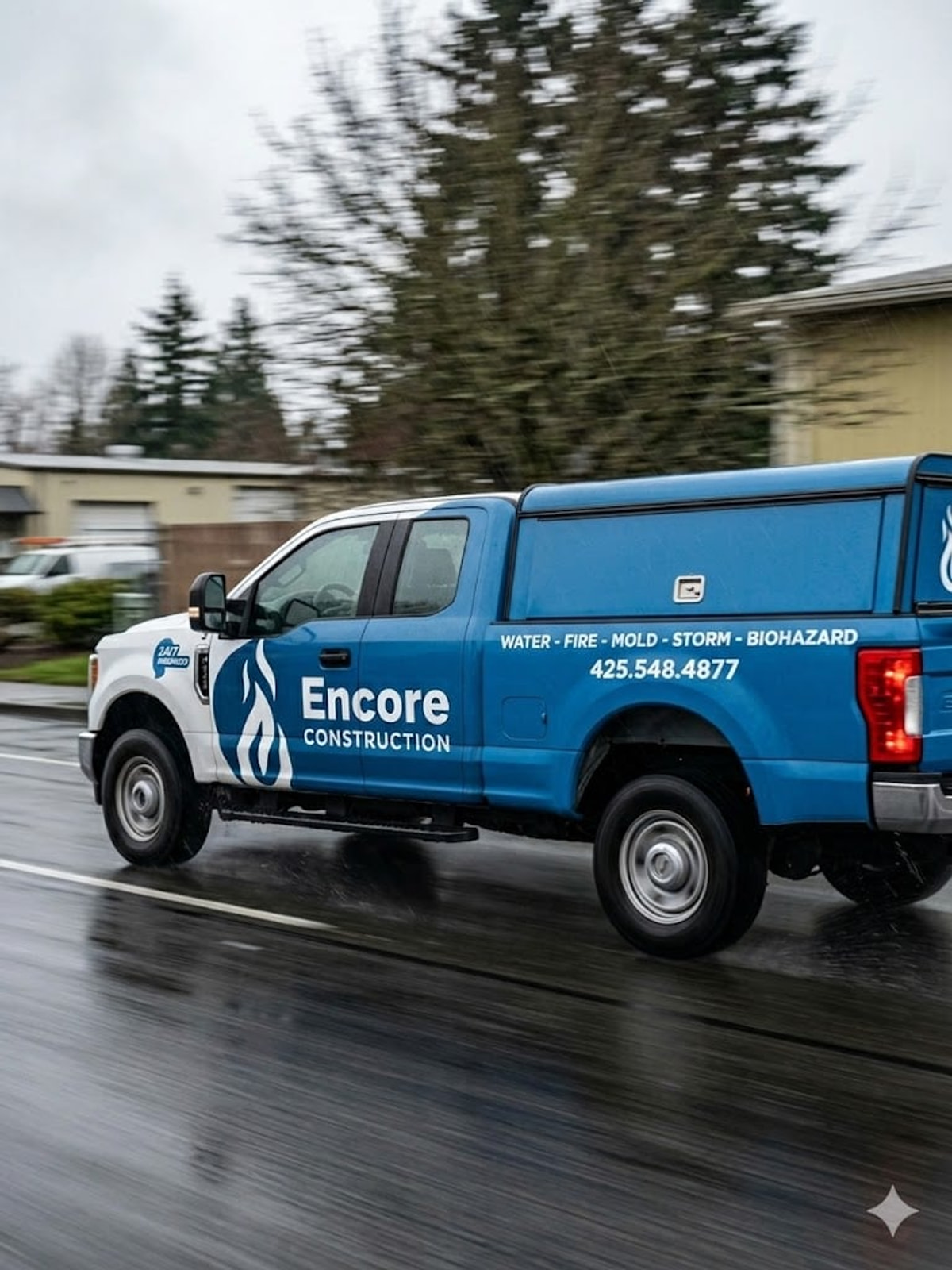
Request flood damage restoration in Seattle
Call 425-548-4877 for emergency help, including weekends, or request a free initial assessment. Tell us which rooms are affected, when flooding began and whether you know the source.