
Visible mold or discoloration
Discoloration on drywall, ceilings or other building materials deserves attention. A visual check can locate a suspected mold problem, but appearance alone does not establish the types of mold present.
Mold & moisture assessment
Schedule a mold inspection when you notice visible growth, musty odors or recurring moisture. Encore’s project manager checks accessible affected areas, measures moisture and documents observations to help identify likely sources and plan the next steps. Your initial restoration assessment is complimentary.

Complimentary initial restoration assessment and estimate for residential and commercial properties. Emergency restoration assistance available 24/7/365.

Know when to call
Visible growth, a persistent odor or repeated water damage warrants an inspection; those signs do not automatically mean you need a laboratory test. Start by locating the moisture problem, then discuss whether sampling would answer a specific unresolved question.
Discoloration on drywall, ceilings or other building materials deserves attention. A visual check can locate a suspected mold problem, but appearance alone does not establish the types of mold present.
A persistent, musty smell can indicate hidden moisture and mold growth even when nothing is immediately visible.
After a leak, flood or appliance failure, schedule an assessment to check drying progress and affected materials.
Recurring dampness in a basement, crawl space or attic can support mold growth. Tell us about suspected attic mold and areas that are difficult to access when arranging the inspection.

A clear starting point
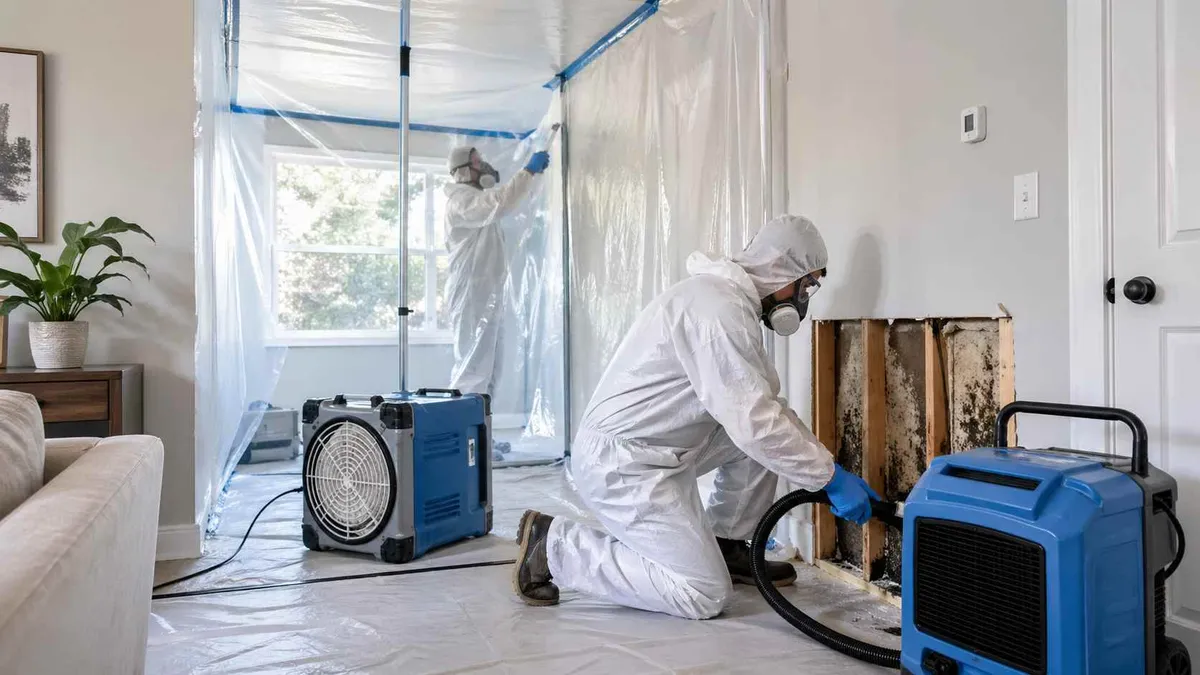
Encore’s initial inspection includes a discussion of the problem, a check of accessible affected areas, moisture readings, photographs and an explanation of proposed next steps. These observations support a restoration estimate; they are not laboratory identification of mold spores.
We’ll discuss recent leaks, known problem areas and prior repairs to understand context.
We review the affected areas within the agreed scope and available access. Tell us about concerns in an attic, basement or crawl space when booking.
We check moisture levels, take photographs and document observations to help explain the affected areas.
We review what we observed, outline options, estimate work needed and explain how remediation or restoration would proceed once authorized.
Understand the difference
An inspection looks for visible damage and moisture sources; mold testing analyzes collected samples. The two answer different questions. A restoration assessment helps define repair needs, while a specialist determines whether sampling is appropriate for a particular investigation.
A visual inspection and moisture readings document conditions in accessible areas. They do not establish mold species, airborne spore levels or a complete indoor air quality assessment. Mold and air quality concerns may need a different scope from restoration inspection services.
When testing is warranted, a professional plans sample collection, obtains air or surface samples and arranges analysis. The purpose and method matter: EPA mold testing guidance recommends experienced professionals to design and interpret sampling and says visible mold usually does not require it.
Testing turnaround depends on the provider and laboratory. Before booking sampling or laboratory analysis, ask us to confirm the provider, scope, cost, report and expected delivery date. Our initial restoration assessment and estimate are free.
Know the scope and cost
Encore’s initial restoration assessment and estimate are free. If sampling or laboratory analysis is needed, confirm the scope, cost, provider and report before booking.
For any Seattle mold testing quote, ask what is included: areas inspected, number and type of samples, laboratory analysis, the written report and any follow-up visit. Confirm the total before authorizing work; a low advertised visit fee may not describe the full scope you need.
Choose the right service
Choose a provider whose experience, scope and deliverables fit your question. A restoration assessment, an independent inspection and laboratory air quality testing serve different purposes; clarify which service you need before booking.
Ask mold inspectors about relevant training, sampling experience, references and the limits of the inspection. If someone advertises a certified mold inspector, ask which organization issued the credential and whether it is current. Confirm who explains results and provides any written report.
Ask whether the inspection company also sells mold removal services. Encore is a restoration and remediation company and may propose cleanup work after its assessment. If independent findings are important to you, discuss using a separate testing company rather than assuming a restoration estimate is an independent evaluation.
What to expect
Call to describe the concern, arrange access for the assessment, review the documented observations and decide whether to authorize restoration. The inspection comes before any decision to proceed with remediation.
Describe the issue, recent leaks, visible growth or odors when you call.
We schedule a project manager to visit and inspect accessible areas and take moisture readings.
At the visit we document findings, photograph affected materials and propose next steps.
Restoration or remediation begins only if you approve the proposed scope and estimate.
Serving Seattle
Mold is a concern in Seattle wherever moisture persists. King County’s mold prevention guidance explains that the wet seasons can increase indoor moisture and encourage mold and mildew. Roof leaks, plumbing failures, water intrusion, condensation and high humidity are reasons to investigate a recurring problem.
Encore serves residential and commercial properties in the Seattle area. Our Seattle office is at 221 1st Ave W STE 200, Seattle, WA 98119. See office and contact details or call 425-548-4877 to discuss an assessment for your home or business.
Answers before you book
An assessment can help you decide what to do about visible damage or moisture. The answers below explain when inspection is useful, where laboratory testing may fit and what to clarify before work begins.
The complimentary assessment is not a laboratory test. Sampling and lab reports are separate activities that should be clarified before booking if you require air sampling, surface samples or formal clearance testing.
A visual assessment and moisture readings can identify areas of growth and damage, but they cannot determine mold species or toxicity. Do not assume dark-colored growth is a particular species or proof of toxicity. Discuss any testing requirements before booking.
Arrange access to the affected areas and share what you know about recent leaks, repairs or water damage. Avoid disturbing suspected areas before the inspection so observations reflect current conditions.
Yes. Encore provides mold remediation and water damage restoration. After you review and authorize the proposed scope, we can schedule the restoration work and coordinate the project manager’s oversight.
An inspection is useful when you need help locating likely moisture sources, understanding affected materials or planning repairs. Encore’s complimentary initial assessment gives you observations and a proposed scope before you decide on restoration. It is not a substitute for specialist sampling when your question requires laboratory evidence.
Mold can cause allergic reactions and irritation, and may trigger asthma in susceptible people, according to the EPA’s guide to mold and moisture. A building assessment cannot diagnose a medical condition. Discuss symptoms or individual health concerns with a healthcare professional.
Testing after mold removal is not automatic; agree on the verification requirements before cleanup starts. EPA guidance notes that surface sampling may help assess cleaning. Ask whether an independent follow-up inspection, moisture checks or laboratory results are needed, who will provide them and how the results will be interpreted.
How can we help?
Request an assessment to identify moisture and affected materials, get documented observations and receive a proposed scope.
Call 425-548-4877