
Storm Damage Restoration in Seattle, WA
Storm damage can create water entry and hidden moisture inside your home or business. Encore Construction provides storm damage restoration in Seattle, WA after wind-driven rain, damaged openings and winter storms. We assess property damage, document moisture and plan water removal, drying, contents handling and agreed repairs.
Request an assessment Call 425-548-4877
Family-owned since 2015 • Free initial assessment and estimate • Emergency service 24/7, 365 days a year.

24/7 emergency response
We provide emergency restoration service 24/7, 365 days a year and a free initial assessment to help prioritize safety and limit ongoing damage.
Residential and commercial
We provide storm damage cleanup for homes and commercial properties, with mitigation and reconstruction planned around the assessed and authorized work.
Local presence
Our main base and contents storage are in Arlington. Our additional Seattle office is at 221 1st Ave W STE 200, Seattle, WA 98119. We serve King, Snohomish, Island, Skagit and Whatcom counties.
What type of storm damage needs attention?
Visible water, soft floors, damaged openings and sagging ceilings need attention after severe weather. The type of damage determines the next step: structural damage may require a specialist and safe access before restoration can begin. Excess moisture left untreated can affect concealed materials as well as visible finishes.
Severe weather and water entry
Water that has entered through exterior openings, gaps, or breaches after heavy wind or driving rain is a primary cause of interior water intrusion and requires assessment for extraction and drying.
Damaged roof or window openings
Damage to roofing or windows can allow water inside. A damaged opening may require roofing, tarping or board-up work by an appropriate specialist. Confirm the responsible provider and work scope before authorizing those services.
Wet floors and wall cavities
Soggy carpets, soft flooring or damp wall cavities indicate retained moisture that can require moisture detection, targeted drying and potential material removal depending on readings and contamination.
Winter freeze/thaw or snow/ice entry
Melting snow, ice dams or freeze/thaw cycles can cause water intrusion around eaves, windows or penetrations and should be evaluated for drying needs and repair planning.
Storm damage cleanup and repair: agree on the scope first
Before we begin the restoration process, we agree on a scope that separates storm cleanup and drying from reconstruction. Mitigation aims to prevent further damage; reconstruction replaces or repairs materials after drying. Moisture readings, contamination and the condition of each material guide that decision.
Water removal and drying
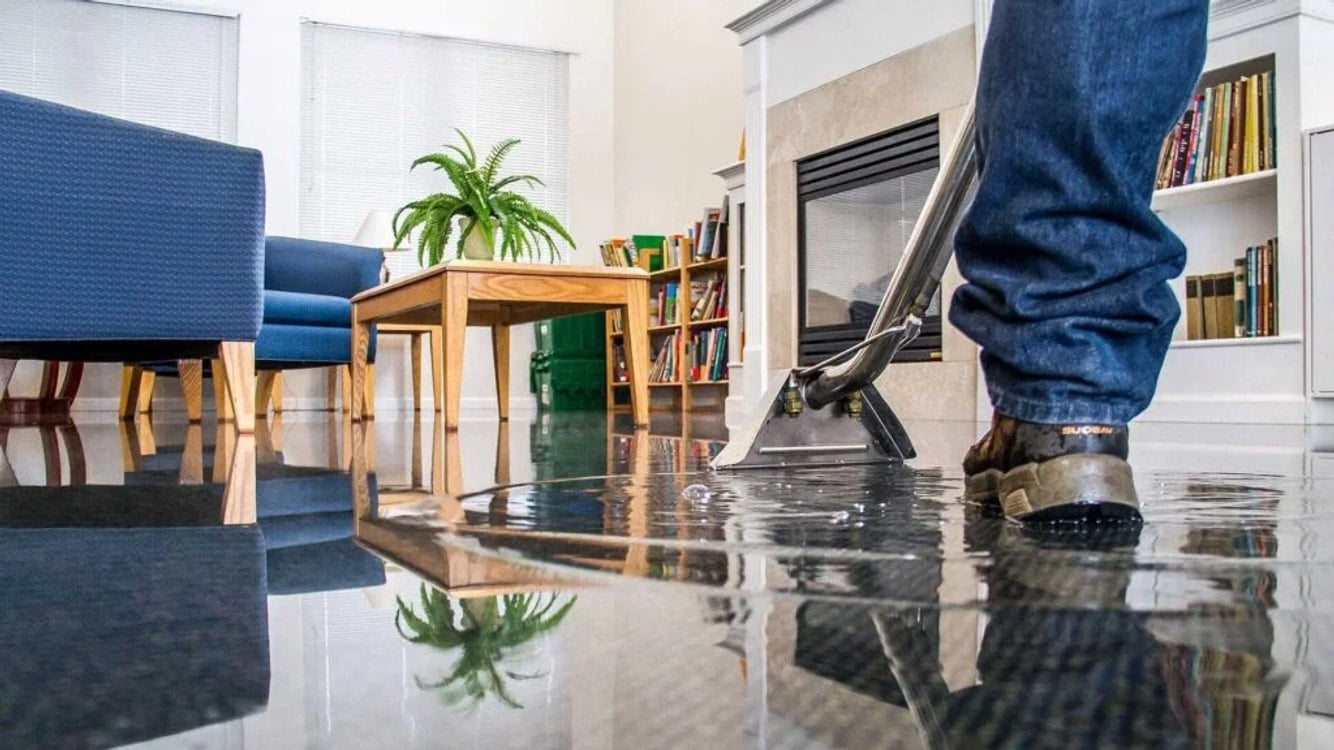
Mitigation reduces ongoing damage. Extraction removes bulk water; drying addresses retained moisture using moisture detection equipment and dehumidification. Typical active drying for an ordinary water loss often takes 3–5 days, though scope and readings determine actual duration.

Contents handling and storage
Contents may be cleaned, packed and stored while drying or repairs proceed. Decisions about restoration or disposal depend on contamination, condition and the agreed restoration plan.

Agreed interior repairs and reconstruction
Reconstruction repairs damaged materials after agreed drying and documentation. The scope, materials and sequencing are confirmed by the project manager and start when the owner authorizes the work.
Our storm damage restoration process
Encore Construction follows a defined restoration process to assess the damage, mitigate risk and restore your property. Our project manager documents findings and coordinates each step with you and any required specialists.
Damage assessment and documentation
Project manager reviews loss history, examines accessible areas, records moisture readings, takes photographs and measurements, and prepares a proposed scope with supporting records for insurance purposes.
Approve plan and access
Work starts after the restoration plan is authorized. The project manager discusses access, scheduling, safety and any required specialists or trades before work begins.
Water extraction, cleaning and drying
Extraction removes standing water. Drying strategies—air movement, dehumidification and containment—address retained moisture. Contamination and hidden water determine the needed techniques and containment.
Review moisture and agree repairs
Moisture readings and documentation guide decisions about material repair versus removal. Once drying goals are met and the scope is confirmed, reconstruction proceeds with agreed deliverables.
What happens next depends on the damage
Different storm-affected situations require different priorities. The table below summarizes typical immediate actions and next decisions. Safety and specialist trades take precedence where hazards are present.
| Situation | Immediate priority | Next decision |
|---|---|---|
| Water inside the building | Stop ongoing entry, extract bulk water, document moisture and photos | Determine drying scope, containment and whether materials need removal based on moisture readings and contamination |
| Damaged openings or unstable structure | Secure area for safety; do not attempt roof or tree work yourself | Engage appropriate specialist for board-up/roofing/structural stabilization; Encore can coordinate reconstruction once specialist work and safe access are confirmed |
| Wet contents and interior finishes | Isolate, document and protect salvageable contents; evaluate contamination | Decide on cleaning, storage or replacement; contents handling is integrated into the restoration plan where appropriate |
Flood damage from outside water needs a different assessment from a small rain leak. Soil, debris and other contaminants can change what can be cleaned and what must be removed. Tell the project manager whether water entered from outside or through a damaged opening, and whether any cleanup has already taken place.
Storm recovery: repair costs, timing and insurance records
Costs and timelines for storm damage restoration vary. Encore provides a free initial restoration assessment and estimate to outline the scope and expected steps.
Extent and materials
Repair cost depends on the extent of damage and the materials selected for repair or replacement. No ballpark price is provided without an assessment.
Safe access and specialists
If safe access requires a plumber, electrician or other specialist, their services affect timing and cost. Fallen lines, unstable ceilings and wet electrical systems require qualified trades before restoration work proceeds.
Drying duration
Typical active drying for ordinary water losses often takes 3–5 days according to company experience, but scope, materials and moisture readings determine the actual duration and do not guarantee full repairs.
Insurance documentation
Photos, moisture readings and work records can support your insurance claim. Encore provides restoration documentation; your insurer determines coverage and payment under your policy.
When comparing restoration companies, ask who handles water removal, contents and repairs; who documents moisture; and which services need a separate trade. Roofing, tree or debris removal and board-up services should be assigned explicitly. A written division of work helps home and business owners understand responsibilities across the recovery process.
Protect your home and avoid storm safety hazards
Safety is the top priority after a storm. When hazards exist, protect people first and call emergency services or qualified trades as needed.
Stay away from downed power lines
Always assume lines are live. Keep clear and call the utility. For guidance on electrical hazards, see the CDC: Protect yourself from electrical hazards.
Avoid unstable structures and trees
Do not enter buildings with visibly unstable ceilings or walls, and do not attempt tree work or roof climbing yourself. Call emergency services for immediate danger.
Do not enter standing water near electrical equipment
Never enter water to reach a breaker or handle electrical equipment in a wet area. A qualified electrician should assess wet electrical systems before power is restored.
Document from safe locations
Take photos and notes from a safe vantage point to support the restoration plan and insurance records, but avoid risky access or climbing on roofs.
Storm damage restoration services for Seattle properties
Encore Construction is family-owned and established in 2015, providing residential storm damage restoration and storm restoration for commercial properties. Our project manager-led approach documents the loss, recommends mitigation and coordinates reconstruction once drying goals and scope are agreed.
Homeowner access and contents
We work with homeowners to prioritize safety, protect important documents and manage contents for cleaning or storage while repairs proceed.
Commercial properties and operations
For business owners, we plan around tenant needs and operating hours where possible, documenting conditions and sequencing work to limit disruption.
Call 425-548-4877. Our Seattle office is at 221 1st Ave W STE 200, Seattle, WA 98119. The main Arlington base and storage support restoration logistics across King, Snohomish, Island, Skagit and Whatcom counties.
Storm restoration questions
What should I do first after a storm?
Ensure people are safe, avoid hazards, document visible damage from a safe location, and call a restoration service for a free initial assessment and estimate.
Is roof repair or tree removal included?
Roof repair, tarping, emergency board-up and tree removal are not automatically included in restoration work. Ask us to confirm which tasks Encore will perform and which need a separate specialist before authorizing services.
How do you find hidden water damage?
Our project manager examines accessible areas, records moisture readings and photographs, and uses those findings to locate retained moisture and guide drying. Access to concealed spaces is discussed as part of the scope.
Can you prevent mold?
Prompt mitigation and proper drying reduce the risk of mold growth. Mold remediation is available when assessment identifies a need, but no universal guarantee against mold or timing promises is made.
How long does storm damage recovery take?
Typical active drying for ordinary water losses often takes 3–5 days, but full storm damage repair timing depends on scope, specialists, materials and drying results.
Will my insurer cover repairs?
Coverage is determined by your insurance company. We provide photos, moisture readings and work records to support claims but do not guarantee coverage, negotiation or payment.
Request emergency storm damage restoration
Call 425-548-4877 for emergency help or request a free initial assessment. Tell us where water entered, which rooms are affected and whether you know of any access or safety hazards.
Encore Construction coordinates mitigation, contents handling and reconstruction as part of a single restoration process when appropriate, while recognizing that specific specialist trades may be required for certain tasks. We assess the damage, document the work and help restore your property after storm-related water intrusion.