
Homeowner Guides
How Long Does Water Damage Restoration Take in Washington?
Understand drying, insurance review, and reconstruction timelines, plus the questions to ask at each stage of a water damage restoration project.
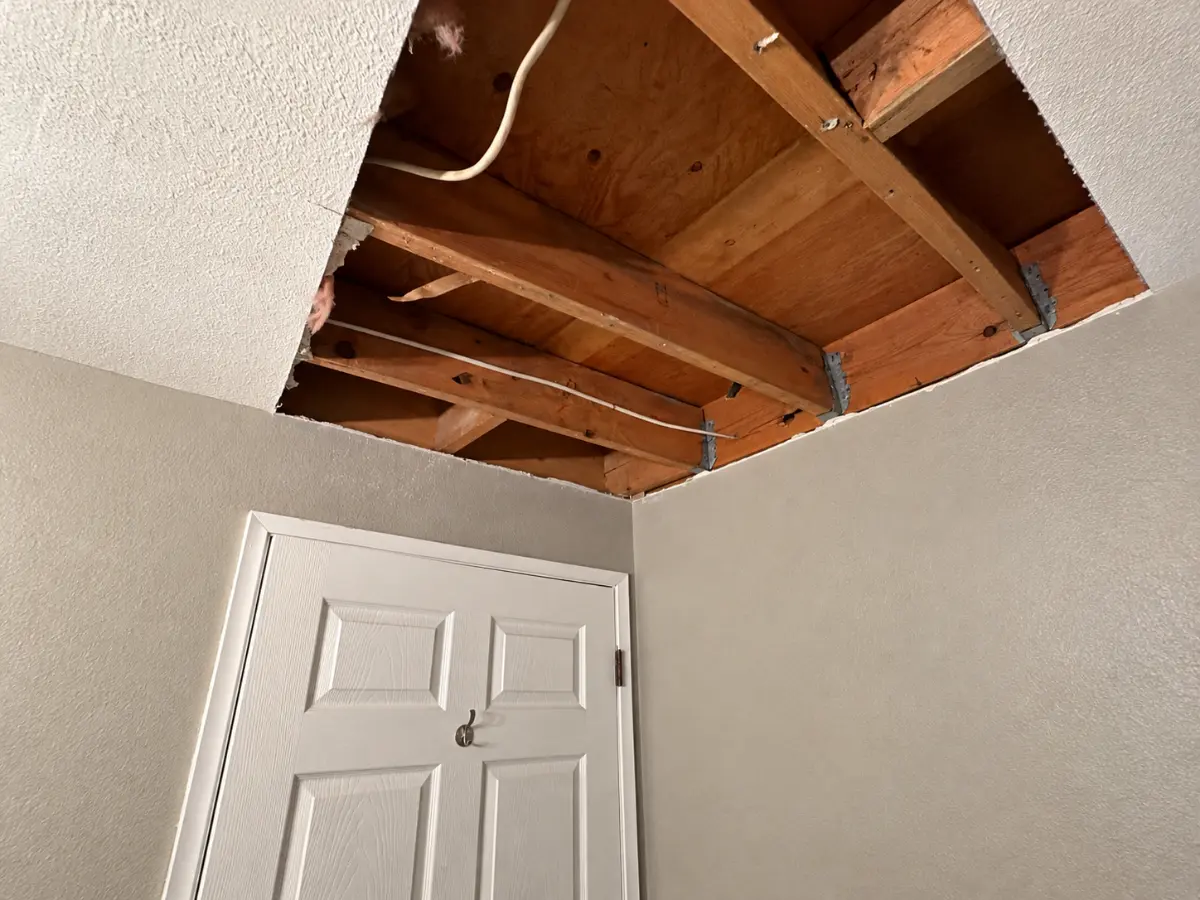
If water just came through your ceiling or across your kitchen, you want one number: how long until the house is normal again. This guide gives you that number stage by stage. How long does each step run? What is the crew doing while you wait? What should you ask before you sign anything? And how do you know the job is truly finished?
Here is the short version. Water damage restoration can take anywhere from a few days to several weeks, and a rebuild that waits on special-order cabinets can run into months. The duration of water damage restoration depends first on the type of water involved and the extent of the damage. How fast the drying started matters just as much.
Quick Takeaways:
- Drying equipment often runs three to five days. Insurance review and reconstruction schedules vary by the project and carrier.
- The EPA advises drying wet materials within 24 to 48 hours to head off mold
- In Washington you have the right to choose your own contractor, even after you have opened a claim
Typical Water Damage Restoration Timeline
A residential restoration project may involve the following stages, sometimes overlapping, and each has its own clock. The table shows what we see on a typical residential loss in Western Washington.
Stage | Typical time | What decides it |
|---|---|---|
Free inspection | One visit; scheduling depends on location and availability | How soon you call |
Containment and demo of wet materials | About 2 hours of demo on a small job, a couple of days on a bigger one | How much got soaked |
Drying | 3 to 5 days on average, 7 to 8 for dense assemblies | Materials and moisture readings |
Insurance approval | Often 1 to 2 weeks; carrier review can take longer | Your carrier and the paperwork |
Rebuild | 3 weeks or more, months with special-order cabinets | Scope and material lead times |
Minor water damage, like a toilet overflow caught within the hour, can take a few days from the first call to the final wipe-down. A larger loss will take several weeks before reconstruction even begins, depending on insurance review, the repair scope, and material availability.
1. What Decides Your Timeline Before Anyone Arrives
Water damage restoration varies from house to house for reasons you can mostly see for yourself. Knowing them helps you judge whether the schedule a contractor gives you makes sense.
The Water Category
The industry sorts water into three categories, and the IICRC S500 standard that my crews follow sets a different procedure for each. A supply-line leak may start as clean water, but contamination and time can change the assessment. Appliance wastewater may contain contaminants and requires appropriate cleaning and material-specific decisions.
Black water adds the most time. It covers sewage backups and floodwater that came in from outside, and we get a lot of the first kind: a drain line clogs, and everything comes back up through the toilet. In that case, porous building materials like drywall and insulation need to be removed and hauled away as part of a site-specific containment, cleaning, and drying plan. Ask your contractor which type of water they recorded and why, because that one line in the report drives much of the mitigation schedule.
The Size of the Affected Area and Its Materials
Square footage matters less than people expect. I can walk into two kitchens of the same size with the same leak, and one will be a far bigger job. In the first, the countertops are laminate and the floor is sheet vinyl over plywood, so my guys pull everything in an afternoon. In the second, there is granite to lift and tile to break out by hand, all sitting on a concrete slab.
Drying time follows the materials as well. Plain plywood with equipment above and below is usually dry in 3 days. A condo floor with gypcrete poured over plywood needs 7 to 8, because the moisture is trapped between two layers. Depending on the extent of the water travel, we may also have equipment in a crawl space under the room or on the ceiling of the unit below.
The condition of the room counts too. We have walked into a spotless kitchen and started work that hour. We have also had three or four guys spend two full days emptying a packed one before the real job could begin. If it is safe, carrying small things out of the affected areas while you wait can take a day or two off your schedule.
How Soon Work Starts
The EPA advises drying water-damaged areas and items within 24 to 48 hours to help prevent mold growth. This is a prevention target, not a guarantee of when mold appears. Hidden water inside a wall keeps wicking upward the whole time. A delay can make drywall and other porous materials harder to save.
The same leak is a much smaller job on the first day than on the third. Depending on the severity of the damage by the time we arrive, a week of equipment can turn into a tear-out and a rebuild.
2. The First Call and the Free Inspection
Your call goes to our office, where we take down the details and pass them to a project manager, usually Matt or Andrew. He calls you back and drives out. His first job is to identify the water source and confirm it is off. A burst pipe or a failed water heater may need a plumber before anything else can happen. Then he walks the house to assess the damage, using moisture meters and thermal imaging to find hidden moisture behind walls and under flooring. He will inspect every room the water could have reached and photograph it with measurements. The visit is free.
This is the time to ask questions. Which rooms did the water reach? What has to come out, and what can stay? I would also ask to see the readings on the meter yourself, because a good project manager will show you a wet wall next to a sound one.
Call a restoration contractor promptly for safe mitigation, and notify your insurer promptly in line with your policy. Describe what you observed and avoid guessing about the cause or duration. You can choose your own contractor after filing a claim, too.
3. What You Sign Before Work Starts
The hardest moment for most of our customers is the first day, when someone hands them a contract while the floor is still wet. The first document is normally a work authorization, which gives the contractor permission to start. Read it, and ask about anything you don’t understand before you sign.
Washington’s Office of the Insurance Commissioner flags one document in particular. An assignment of benefits can let a contractor negotiate and settle with your insurer without your approval. The same office advises getting every guarantee in writing. Ask the contractor to point to the line that says who talks to your insurer and who approves changes to the scope.
This is also when you check who you are hiring. Professional water damage restoration means trained people and calibrated instruments, so ask whether the firm is IICRC-certified and whether it is registered with Washington L&I. Any homeowner can look a contractor up there in a minute. When you compare water damage restoration services, ask one more thing: does the company use its own crews for every stage, or does it hand the rebuild to someone else?
4. Mitigation: Containment and Tear-Out
Mitigation is everything a crew does to stop the damage from spreading. Work starts as soon as site conditions, authorization, and crew availability allow. Our two-person crew moves furniture out of the way and covers the floors. They hang plastic barriers so dust stays out of the rest of the house.
Standing water comes out first, and on a large loss we bring truck-mounted pumps for the water extraction. That part of the water removal takes a few hours. Then the crew pulls out the damaged materials that cannot be saved. Demo takes about two hours on a small job. Even on bigger projects, we like to have the demo complete within a couple of days. Complex losses, safety requirements, or access restrictions can take longer.
Ask to see why each material is coming out. A contractor should be able to show you a wet reading on anything they want to remove. Ask where your belongings will go, too. Ours go to a 13,000-square-foot warehouse and stay there until the house is ready.
5. Drying and Daily Readings
Once the wet material is out, the crew sets air movers to push moisture out of the framing and a low-grain refrigerant dehumidifier to pull it from the air. In a Western Washington winter the outside air is already damp, so open windows will not do this for you. The equipment runs around the clock.
Structural drying typically takes 3 to 5 days. The drying process can take 7 to 8 days on gypcrete or concrete, and it will take longer still if the water sat for days before anyone called. A technician comes back to take readings, and the equipment leaves only when the wet areas read the same as the dry parts of the house.
Ask for the moisture log at the end of this stage. It is your proof that the framing was dry before anyone closed the wall.
If we find mold along the way, it becomes a separate scope. Mold remediation means containment and air filtration, plus removal of whatever is contaminated, and it adds days or weeks. Not every leak grows it.
6. The Insurance Wait
Our owners estimate that about 95% of our jobs involve an insurance claim, and this stage is the one nobody warns you about. The equipment is gone, the house is quiet, and visible work may pause while your carrier reviews the file; review times vary.
The state regulator’s guidance says an insurer has 30 days from the filing date to inspect the damage, so a slow adjuster can stretch this stage. The same page confirms your right to select your own contractor. What speeds it up is a complete file. An insurance claim for water runs on line-item estimates and moisture logs, backed by thousands of job-site photos. Our in-house team builds all of it and handles the back-and-forth with your adjuster. Managing a complex claim yourself can involve substantial paperwork and follow-up.
Ask your contractor on what date the file was submitted and whether the adjuster has answered. A file that has been submitted is not yet a file that has been approved, so find out which one you have. And if your insurer mails a payment to you, ask what it covers before you spend it. We have seen people use that money without knowing it was meant for the rebuild.
7. The Rebuild and Its Estimate
Restoration work ends with putting the house back together, and restoration timelines spread out the most at this stage. Drywall repair and paint in one room can be done in days. A typical rebuild runs three weeks or more. When cabinets have to be special-ordered, we have waited months for them to arrive.
Read the rebuild estimate line by line before work starts. The table shows a sample structure. It is not a price quote, and your items will depend on the house.
Item | What the estimate should specify |
|---|---|
Demolition and haul-off | What was removed during mitigation and what still has to come out |
Drywall and insulation | Square footage, finish level, and which walls |
Flooring | Material, area, and whether underlayment is included |
Cabinets and countertops | Make, material, and the lead time for delivery |
Paint and trim | Rooms covered and number of coats |
Contents | Packout, storage, and return of your belongings |
Agree in advance on how changes get approved. The insurance regulator also cautions that if a contractor suggests an upgrade during repairs, you should understand your coverage before you say yes.
Our own crews do the rebuild, so there is no handoff to a subcontractor and no second company to schedule. Our owners estimate that about 95% of our mitigation customers also use us for reconstruction.
8. What You Should Have in Hand When the Job Closes
A finished room is only part of a finished job. Before you sign off, walk the house with the project manager and check every area listed in the estimate. Then ask for the records. You should leave with the moisture log and the photo documentation, along with the final estimate and the warranty terms in writing. We also give a copy of the full claim file to any customer who wants it. Keep digital copies. They are useful if a problem shows up later, and a buyer’s inspector may ask for them when you sell.
Planning Your Restoration With Encore Construction
You now know what to ask at every stage, from the first reading on the meter to the last page of the file. If you are dealing with water damage today, start with the basics: if safe, shut the water off and take photos before you move anything, then call for help. Trapped moisture is what turns a small leak into rot and, eventually, structural damage.
Encore Construction provides 24/7 emergency response for water damage, mold, fire, and biohazard incidents throughout Skagit, Snohomish, King, Whatcom, and Island counties in Washington. We are local restoration experts, family-owned and not a franchise. One company handles your water restoration from the first pump to the final repair, including the insurance paperwork. Call us for a free inspection. We’ll tell you where your water damage restoration project stands and how long it should take.
FAQ
Who should I call first, my insurer or a restoration company?
Contact a restoration contractor promptly and notify your insurer according to your policy. Do not delay necessary emergency mitigation or insurance notification while waiting for an inspection. You can still choose your own contractor after filing.
Can I use my own contractor if my insurer recommends one?
Yes. Washington’s insurance regulator states that you have the right to select your own contractor. If you use the one your insurer chooses, the insurer should guarantee their work.
How fast does mold start after a leak?
The EPA’s guidance is to get wet materials under control within 24 to 48 hours to prevent mold growth. Act promptly; conditions and materials determine the actual risk.
Does home insurance cover flooding?
It depends on where the water came from. A sudden pipe failure is a different claim from a river coming over its banks. The state regulator advises contacting your flood insurer as well when the loss involves flooding from a nearby waterway.
How do I know the walls are really dry?
Ask for the readings. A technician compares the wet areas with parts of the house the water never reached, and the equipment stays until the two match.
What causes most water damage, and can I prevent it?
Failed pipes and supply lines come first in our calls, then appliances, then accidents like a tub left running. Have shutoff valves and supply lines checked regularly. Do not force a stuck valve. Ask a plumber to assess aging or brittle pipes, including CPVC where present; a home’s construction year alone does not establish the pipe material or condition.