
Homeowner Guides
What Is Pack-Out During Water or Fire Damage Restoration?
Understand pack-out after water or fire damage: inventory, packing, cleaning, storage, insurance questions, and returning your belongings.
The fans are running, and now the project manager is telling you the furniture has to go too. Where is it going? How will you know everything comes back? That process is called pack-out, and those are the right questions. I wrote this guide for the homeowner who has just been told, after water damage or a fire, that their belongings have to leave the house.
A content pack-out is the part of a job people know least about, and it involves the things they care about most. On our jobs it starts with a big truck in the driveway. I don’t think anyone should hand over a houseful of their belongings on trust alone, so this guide walks through every stage you will go through and what you should have in writing before the first box is taped shut.
Quick Takeaways:
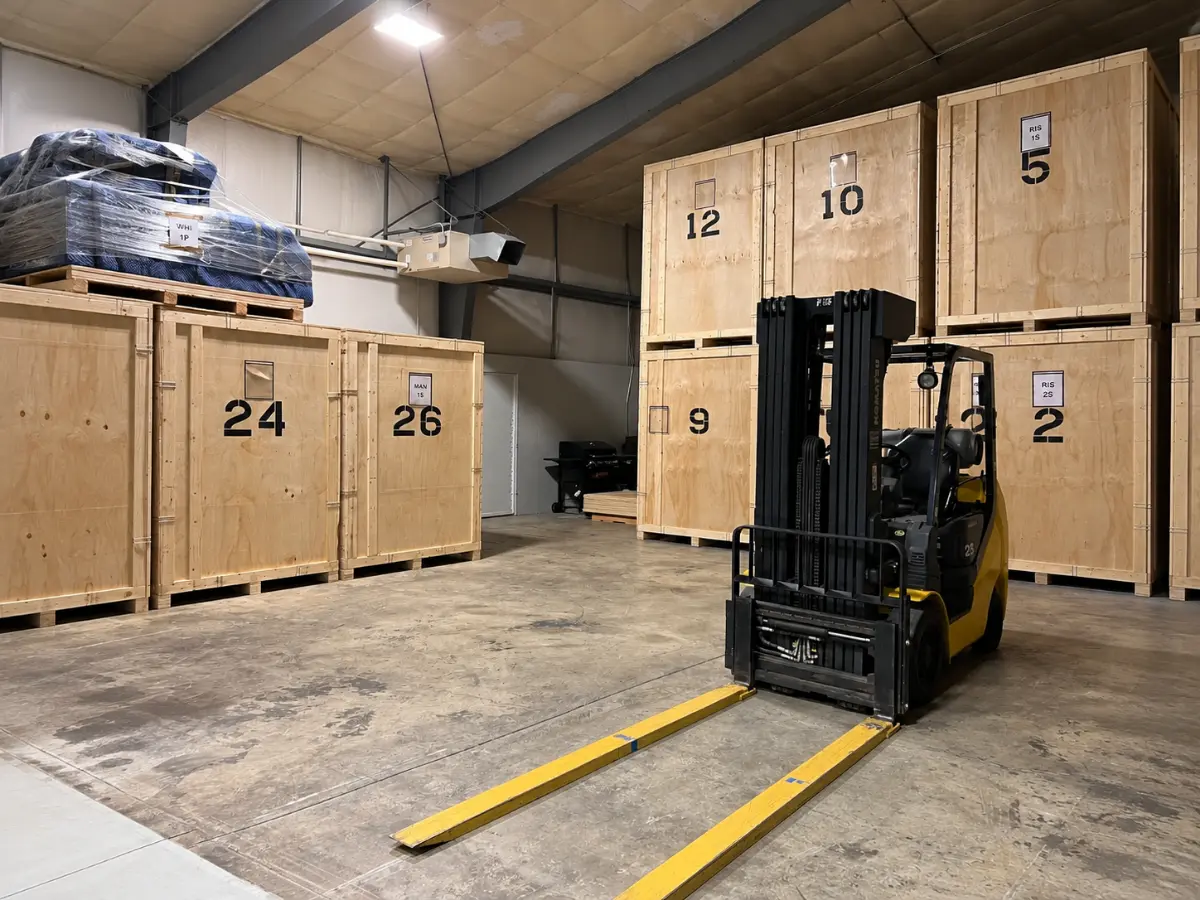
- Our warehouse can hold the contents of 60 to 100 homes at once, and a typical household fills about three storage vaults
- Our inspection is free for water, mold, fire, and biohazard losses
Pack-Out at a Glance: The Stages You Will Go Through
Pack-out means taking your belongings out of a damaged house and caring for them until the building is repaired. In our company the same restoration team that handles the structure handles the contents. The table follows the job in the order you will live it.
Stage | What happens | Your part |
|---|---|---|
The walkthrough | The project manager decides which rooms have to be emptied | Ask which rooms and why |
The paperwork | You authorize the work, and your carrier is told contents are involved | Read before you sign |
What stays with you | You set aside what you will need in the coming weeks | Medications, documents, daily clothes |
The list | Every item is photographed and written down by room | Point out what matters most |
Packing day | The crew wraps, packs, and loads the truck | Be there if you can |
Cleaning | Items are treated and sorted into saved and lost | Decide on the doubtful ones |
Storage | Everything waits in a vault until the house is ready | Know the address |
Pack-in | The crew brings it all back to the right rooms | Check it against the list |
How Pack-Out Differs After Water and After Fire
Water and fire empty a house for different reasons, and the difference decides how much leaves and how long it stays away.
What to Compare | After water | After a fire |
|---|---|---|
When the crew can go in | Once the water is off and the rooms are safe | Only after the fire department says it is safe to enter |
Why things have to leave | The room is needed for demolition and equipment | Smoke residue is on everything and keeps spreading |
How much goes | Usually the affected rooms | Often most of the house, because smoke travels |
What is on the items | Moisture and sometimes contamination | Residue and odor, plus water from the hoses |
How they are cleaned | Moisture removal and sanitizing | Deodorizing with hydroxyl and ozone equipment |
What sets the clock | Prompt drying helps reduce mold risk; the 24–48-hour target is not a guaranteed deadline | The rebuild schedule, which runs much longer |
How long storage lasts | Weeks on a typical job | Months, once plans and permits are counted |
When You Need Pack-Out, and When You Don’t
Not every loss sends a truck to your door. A burst pipe that wets one corner of a bedroom usually calls for a relocation inside the house: we move the furniture to a dry room and cover it. Most water damage jobs end there. Pack-outs become necessary when the work itself needs the space or the air is unsafe for your things.
The clearest cases look like this. Demolition fills a room with dust, and structural drying runs loud equipment around the clock. Fire damage leaves soot that keeps settling on every surface until the source is cleaned. Sewage or flood water contaminates what it touches. Mold remediation requires containment that furniture would block. The building can force the decision too. When the crew has to cut out drywall and other building materials during mitigation, or when structural damage means structural repairs are coming, the room has to be empty.
A complete removal is rare outside of large fires. More often we pack out the affected floor or a few rooms and leave the rest of the house livable. Ask your contractor to mark on a floor plan which rooms are going and why.
The Walkthrough and the Paperwork
Pack-out begins with a conversation, and you should come out of it with two things settled. One is the scope. The other is what you are signing.
The first document is normally a work authorization. Read it, and ask where it mentions your contents. Washington’s Office of the Insurance Commissioner advises getting every guarantee in writing, and that applies to your furniture as much as to your walls.
Anything you will need before the rebuild is finished should not get on the truck. Keep your medications and identification with you. The same goes for financial papers, chargers, and a week or two of clothes. Tell the crew which closet or room holds these things so nobody packs them by mistake. Take your own photos of each room as well. They cost you five minutes, and they give you an independent record.
The Inventory: The Record Your Claim Runs On
Before a single item moves, a technician photographs it where it stands. Each piece goes onto an inventory list with its room and a short note on its condition. Good practice is to categorize everything at this point as salvageable or not, with a separate mark for anything doubtful. That detailed list does two jobs. It tells you where every box is, and it documents the condition of your items for the insurance company. Consumer guidance for the Puget Sound area notes that a claim report has to list every item destroyed or damaged, so this record becomes the backbone of your insurance claim. The state regulator adds a tip for people who had no home inventory before the loss. Walk through each room in your mind and write down what was there, starting with the valuable pieces.
Tell the crew about high-value pieces before packing starts. Jewelry and art deserve their own line on the list with close-up photos. Point out sentimental items as well, because a box of letters looks like any other box to someone who doesn’t know the family.
Ask for a copy of the list before the truck pulls away, and check that the box numbers on it match the labels.
Packing Day
Packing is slower than moving day, and it should be. Our restoration technicians use premium packing materials and wrap furniture so it cannot rub in transit. Each box is labeled with its room and its number from the list. Be home if you can. You know which drawer holds the passports and which lamp was your mother’s, and five minutes of your time saves a week of searching later.
Some things need special handling. Electronics that got wet should not be plugged in to test them. The National Electrical Manufacturers Association warns that electrical equipment exposed to water can be extremely hazardous when it is re-energized. A refrigerator or another large appliance is documented in place and moved only if the work requires it. Upholstery and other textile items are bagged separately, since they hold odor and moisture longer than hard goods. Then the truck goes to our warehouse in Arlington.
Cleaning and Restoration of Your Belongings
Contents are assessed and cleaned as appropriate before storage, so odor and residue do not set in while they sit. For smoke and musty smells we use hydroxyl and ozone equipment, and clothing and linens are cleaned separately. Ozone treatment requires a controlled, unoccupied environment and appropriate operating procedures. Not everything can be saved, and you should hear that early. Porous items that cannot be cleaned and dried may need removal. The EPA notes that upholstered furniture can be difficult to dry within 48 hours and recommends consulting a specialist for valuable pieces.
A professional restoration crew will explain which items may be salvageable and which should be documented as a loss. Discuss doubtful pieces and disposal decisions with the contractor and your insurer before items are removed, subject to any immediate safety requirements. Cleaning the wrong way can damage belongings further.
Pack-Out Storage: Where Your Things Wait
Our storage facility in Arlington covers 13,000 square feet. Each customer’s belongings go into wooden vaults built for the purpose, and every vault is assigned to one household. The warehouse is climate-controlled with 24/7 security. That matters because swings in humidity and temperature can damage wood and fabric, and stored items may sit for a while.
How long depends on the building. On a water job, drying may take days, while insurance review and reconstruction can extend the schedule. Permits, repair scope, and special-order materials also affect timing. We coordinate storage and return with the agreed reconstruction schedule.
The Pack-In
When the rebuild is finished, the process runs in reverse. Our crew brings everything back and places each piece in the room it came from. Walk through with the list in your hand and check items off as the boxes are opened. Anything missing or damaged should be written down that day, while the crew is still there.
How Pack-Out Fits Into Your Insurance Claim
Our owners estimate that about 95% of our jobs involve an insurance claim. Our in-house team provides the contents inventory and photos to your carrier along with the structural documentation. Ask your insurer or agent which pack-out, cleaning, storage, and living-expense costs your policy covers; limits, deductibles, and exclusions apply. Save related receipts and keep a log of calls, including the date and the person you spoke to.
What to Ask Before Anyone Touches Your Things
Pack-out best practices are easy to check with a few direct questions. When you compare restoration services, put these to each contractor.
Question | Why it matters | Encore Construction |
|---|---|---|
Who does the pack-out? | A subcontractor adds a second company to follow up with | Our own crews, start to finish |
Where is the storage? | You should know the address | Our warehouse in Arlington |
Is it secured and protected from humidity? | Wood and fabric react to damp air | Yes, with 24/7 security |
Do I get the list before the truck leaves? | It is your record and your claim | Yes |
Are the crews trained? | Contaminated contents take trained handling | Ask about the training of the crew assigned to your job |
Is the company registered? | Bond protections apply only to registered contractors | ENCORCL857K6 |
Who puts it all back? | The return is half the job | The same crew |
Property owners who hire one company for the structure and another for the contents end up coordinating both. That is the main reason we keep everything in-house.
Call Encore Before the Truck Arrives
A home disaster is hard enough without wondering where your things went. Encore Construction provides residential and commercial property restoration across Skagit, Snohomish, King, Whatcom, and Island counties. We answer emergency water and fire calls 24/7.
Full restoration involves more than the building. Whether you are dealing with fire or water damage, our restoration professionals handle damage mitigation, cleanup, contents, and the rebuild in-house, so one company is responsible for your belongings throughout the restoration process. Call us for a free inspection, and we will tell you whether you need a truck or just a dry room down the hall.
FAQ
Can wet photos and papers be saved?
Often, if you act fast. Photos, papers, and books should be frozen if they cannot be dried within 48 hours. Federal guidance also warns never to pull apart wet photographs that are stuck together.
Is food from the house safe after a fire?
No. The U.S. Fire Administration says not to eat or drink anything that has been near the flames, the smoke, or the water used to put the fire out. That covers medicine too.
Can I use appliances that got wet while the fire was being put out?
Not until someone has checked them. Fire-recovery guidance based on the federal handbook says an appliance exposed to water or steam should be serviced before it is used again.
Are my jewelry and art covered at full value?
Not always. Many standard policies cap what they pay per item for high-value pieces unless those pieces are scheduled separately. Ask your agent for the limit before you assume.
What if my important documents were destroyed?
Most can be replaced. The U.S. Fire Administration’s guide for families includes a section on replacing documents, and it is worth downloading on the first day.
Do you handle pack-outs for businesses and rentals?
Yes. On commercial jobs we usually work with the building owner or the property management company that authorizes the work, and the process is the same from there.