
Homeowner Guides
Why Water Damage Takes Longer to Dry in Some Homes
Learn why materials, layered floors, hidden moisture, airflow, and indoor conditions can extend water damage drying, and what to ask your restoration crew.
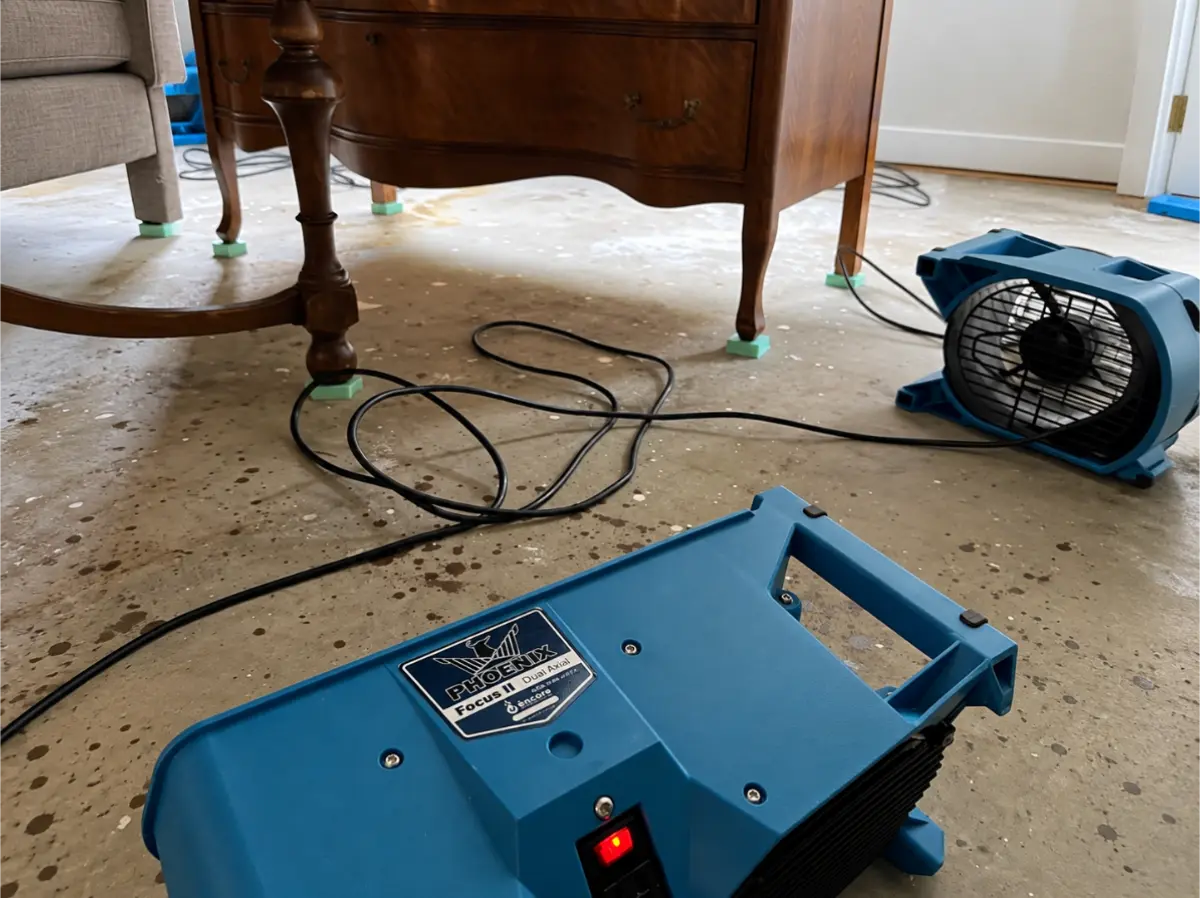
Your neighbor had a leak last winter, and the fans were gone in three days. Yours have been roaring for a week, and the technician just asked for two more. Same kind of pipe, same street, same crew. So how long will yours take to dry, and what is different?
Almost always, the house. I have walked into two kitchens of the same size with the same failed supply line and watched one take twice as long as the other. Nothing went wrong in the slow one. It was built from materials that hold water longer.
I wrote this guide for the homeowner who wants to know which kind of house they have after water damage. It goes through a home layer by layer, from the slab to the air in the room, and shows what each layer adds to the schedule. It also tells you what to ask at each visit so the extra days make sense.
Quick Takeaways:
- Our team often sees drying take 3–5 days; layered floors can take longer. These are experience-based estimates, not guaranteed deadlines.
- Outdoor conditions, indoor humidity, airflow, and temperature all affect drying; measured conditions guide equipment choices.
- Keeping wood dry reduces decay risk; persistent moisture needs professional assessment.
Your House Has a Drying Class
Restoration crews do not guess at a schedule. The ANSI/IICRC S500 standard sorts every water intrusion into one of four classes, based on how much water the materials took in and how readily they give it back.
Class | What got wet | Where we see it | What it means for drying time |
|---|---|---|---|
1 | A small area, with materials that absorbed little | A spill on sealed tile or vinyl | The shortest jobs |
2 | Carpet and drywall in part of a room | Most supply-line leaks | The 3-to-5-day average |
3 | Porous materials across most of the room, often from above | A failed line on an upper floor | More equipment for a similar number of days |
4 | Water bound deep in dense or layered materials | Hardwood, plaster, concrete, layered subfloors | The longest jobs |
Class 4 involves water held in dense materials or layered assemblies and may require specialized drying. A long schedule alone does not establish the class; a technician assesses the wet area and materials.
The Parts of a House That Add Days
Each layer of a house can push a job from one class into the next. Here is what we look at, from the bottom up.
The Subfloor
Subfloors can strongly affect the schedule. On some of our jobs, plywood with good access has dried in about three days, while gypcrete over plywood has taken seven or eight. Moisture can remain between layers, but these are examples from our experience; readings, access, conditions, and manufacturer requirements determine the actual target and duration.
Concrete can also retain moisture. A slab on the ground has limited drying paths, and surface appearance does not show how much moisture remains inside. A flooded existing slab should be assessed on its own condition; new-concrete curing rules do not establish a restoration timeline.
The Finish Floor
What sits on top of the subfloor decides how soon we can reach it. In one kitchen the sheet vinyl lifts in the afternoon. In the next there is tile to break out by hand, and nothing under it can be treated until that is done.
The tile also hides water. The surface looks dry within the hour while the layer beneath it is soaked.
Hardwood can hold moisture deeply and may need specialized drying. EPA guidance advises caution with heat on hardwood floors. The crew monitors moisture and the condition of the boards to select a drying method; salvage is not guaranteed. Source guidance.
The Walls
Building materials in a wall release water at different speeds. Materials like drywall pull water up through the paper face and keep wicking after the floor is clear. Insulation behind it holds that water against the frame.
Older homes add plaster, which the standard lists among the slowest materials. Some newer buildings have two layers of wallboard on a shared wall, and a doubled wall is another low-evaporation assembly.
The EPA says wet insulation should be discarded and replaced, so an insulated wall usually has to be opened. When the affected materials cannot be saved in place, they come out, and we like to have that demo complete within a couple of days even on bigger projects.
Cabinets behave like part of the wall. A run of base cabinets seals off everything behind it, so we either get airflow in there or take them off.
How Many Levels the Water Crossed
The number of stories is one of the first things we count. A second-story leak gives us a wet floor above and a wet ceiling below, with a closed cavity between them. Hidden moisture in walls or ceilings is the reason a job that looked like one room turns out to be three.
In a condo the lower level may belong to someone else. That adds a second household to schedule around, and it is one more reason condo jobs run longer than house jobs.
The Air: Season and Climate
A dehumidifier removes moisture from the air, while air movers help moisture evaporate from materials. Outdoor humidity alone does not tell you whether ventilation will help: temperature and actual moisture content matter too. Follow the crew’s instructions about windows and equipment so the indoor drying environment stays controlled.
The effect is measurable. Concrete specialists note that when the humidity of the surrounding air rises, a slab’s rate of drying slows. Airflow inside the house counts too, since closed-off rooms hold wet air against the surfaces we are trying to clear.
What Is in the Room
A crowded room is a slow room. We walked into a spotless kitchen and started work that hour. We have also had three or four guys spend two full days emptying a packed one before the real work could begin. Every built-in that blocks a wet wall means the job becomes more complex.
What Multiplies Every Factor Above
Prompt discovery can limit how far water spreads, but elapsed time alone does not determine the class. The same leak can produce different drying needs depending on the wet area, materials, access, and amount of absorbed water. A delay can let water penetrate more deeply into layered floors and framing.
Standing water can spread through seams and into hidden materials. EPA guidance recommends drying wet areas and items within 24–48 hours to help prevent mold. This is a prevention target, not a fixed countdown or guarantee. Trapped moisture behind a baseboard or inside a wall can increase the risk even before visible growth appears. Source guidance.
Wood decay depends on sustained moisture, suitable temperatures, and decay fungi. Keeping wood dry reduces the risk, while persistent wetting can damage finishes and eventually structural wood. A professional should assess moisture and any deterioration rather than rely on a single percentage or a fixed number of weeks.
Clean water from a supply line lets us save materials in place. Water from a drain backup does not. The Gypsum Association says boards exposed to sewage or flood water must be replaced, which means more demo and a longer rebuild.
How to Find Out Which Kind of House You Have
You do not need to open a wall to learn most of this. The answers come at four points in the job, and each one shapes your drying timeline.
At the Inspection
Our project manager, usually Matt or Andrew, starts with a free visit. We use moisture meters and thermal imaging to map where the water went. Surface water may be gone before he arrives, but that was the smallest part of the water in the house.
Ask what the subfloor is and which class he is recording. Then ask how many days he expects and what could change that number.
When the Equipment Goes In
The crew sets air movers and at least one dehumidifier. Professional drying equipment runs around the clock. Ask where each machine is aimed and why. In a Class 4 house you may see more machines than your neighbor had, or machines aimed into a cavity instead of across a floor.
At Each Monitoring Visit
A technician comes back to monitor the drying process. He compares the wet areas with parts of the house the water never reached. The equipment and moisture readings together tell him whether to add a machine or move one.
Ask what the number was yesterday and what it is today. A slow house shows steady drops that take longer to reach the target. A problem shows a number that has stopped moving.
At Sign-Off
The crew signs off when the affected materials meet the documented drying goals, using suitable measurements and dry reference areas where appropriate. Ask for the moisture log and any remaining material or flooring tests before the equipment leaves.
Why a Wall Can Feel Dry and Still Be Wet
Your hand reads the surface, and the surface clears first. Drywall can feel dry while the cavity behind it is not. A fan pointed at water damage doesn’t fix what is inside the wall, even after the visible water is gone.
Meters have limits as well. The Gypsum Association notes that a hand-held meter is useful for mapping wet areas against dry ones, but it is not a reliable way to decide on its own what must be replaced. That call takes a trained eye on the material. Without proper intervention, moisture can remain inside a wall that was closed too soon. A musty smell comes first. Baseboards stay damp, or paint blisters near the floor. Mold growth behind a finished wall means remediation and a second round of demo, and a short job turns into a larger restoration project.
What You Can Do to Help a Slow House Dry Faster
You cannot change what your house is made of. A few habits still take days off the schedule:
- Call on day one. A wall we reach within hours can often be saved in place.
- Know your floor before you need to. Find out whether you have plywood, gypcrete, or a slab, and tell us on the first call.
- Clear the small things. If it is safe, carry loose items out of the wet rooms before the crew arrives.
- Follow the crew’s instructions for operating drying equipment. Report an outage or safety concern promptly; do not move or adjust machines yourself. Controlled drying helps reduce mold risk.
- Tell us what you notice. A new stain or a smell is information we can act on the same day.
After the Equipment Leaves
Dry framing is the halfway point. Once the water is removed and the readings are signed off, the water damage repair process begins with your insurer’s approval and ends with our own crews putting the house back together.
Get Water Damage Drying Help From Encore
If you have experienced a leak and you are not sure what is under your floor, call a professional before you rent a fan. Water damage can take days to show on the surface, and the slow materials are the ones you cannot see.
Call a water damage restoration company that measures before it promises. Encore Construction answers 24/7 across Skagit, Snohomish, King, Whatcom, and Island counties, and the inspection is free. Professional water damage restoration starts with readings, and ours are yours to see.
We are family-owned and not a franchise. Our crews handle professional water mitigation, structural drying, cleanup, and the rebuild with professional equipment and our own people. Drying water damage properly is the surest way to protect your home, and we would be glad to tell you what kind of house you have if you are dealing with water damage today.
FAQ
Does a bigger house take longer to dry?
Not by itself. Square footage matters less than what the wet rooms are made of. A small condo kitchen on gypcrete can outlast a large kitchen on plywood by several days.
Will my hardwood floors be saved?
Sometimes. Hardwood holds water deep, and the EPA cautions against pushing it with heat. We decide from the readings, and we will tell you early if replacement is the safer call.
Is wet drywall always replaced?
No, but the bar is high. The Gypsum Association says boards exposed to water can stay only if the source is fixed, the water was uncontaminated, and the board is still sound. Its own rule is that when there is any doubt, replace it.
Does adding more machines make it faster?
Up to a point. The standard ties the amount of equipment to the class of the job, and a wide wet area does need more of it. Dense materials release water at their own pace, though, and extra machines will not change that.
When can new flooring go down over a slab that got wet?
After the slab has been tested. The flooring trade uses a probe test, ASTM F2170, that measures moisture inside the concrete. Ask your installer for the result before any adhesive goes down.
What indoor humidity level should I maintain after the job is done?
EPA guidance recommends indoor relative humidity below 60%, ideally 30–50%. A hygrometer can help monitor conditions; ask the crew about the appropriate settings for your home. Source guidance.
When can I repaint a wall that got wet?
Wait for the sign-off readings. Do not repaint until the walls and ceilings are completely dry. Paint over a wet wall seals the moisture in behind it.