
Homeowner Guides
Should You Call a Restoration Company or Insurance First After Water Damage?
What to expect when calling a restoration company and your insurer after water damage, from documenting the loss to the claims process.
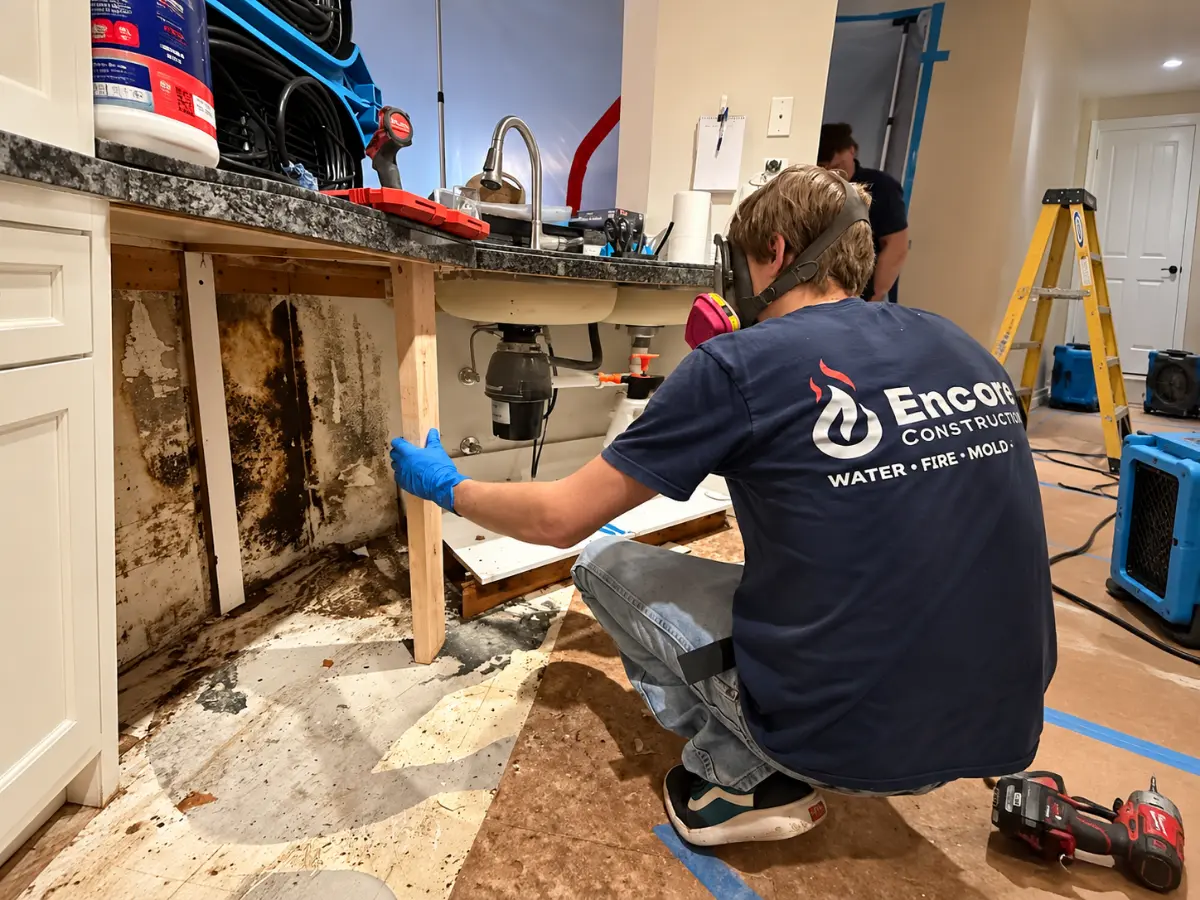
We sit between homeowners and insurance companies every working day. You are not alone when disaster strikes. When the question comes up of who to call first, the restoration company or the insurance company, I always say call us, because we know how to do everything right.
I wrote this for people standing in a wet room with a phone in hand, and for people who already made one of the two calls and want to know what comes next in the claims process.
Quick Takeaways:
- Check your policy for a water damage sublimit, because some homeowners policies cap water losses at as little as $10,000 on a $500,000 policy
- The Office of the Insurance Commissioner takes questions and complaints about water damage insurance claims at 1-800-562-6900
- Turn every shutoff valve under your sinks and toilets once a year, because most of the water damage we see starts with a failed pipe or supply line
- If you have no insurance, tell us at the first visit and we’ll take 20% off
The Short Answer for Your Water Damage Event
The right first call depends on the water source and on what you have already done. The table covers the situations we hear most often.
Your situation | First call | Then |
|---|---|---|
A burst pipe or appliance line, water is off | Restoration contractor for a free inspection | Your insurance company the same day, with photos and a scope |
Water still running and you can’t reach the valve | Restoration contractor or plumber, whoever picks up first | Your insurance company once the source is stopped |
Sewage came up through a drain or toilet | A restoration team with protective gear | Your insurance company the same day |
A river or creek flooded the house | Your flood carrier and your home insurance carrier | A contractor who knows flood claims |
You already filed and nobody has come out | A contractor of your choice | Tell your adjuster who you hired |
The fourth row is the exception to my rule, and section 7 explains it.
The Clocks That Start When Water Damage Occurs
Two phone calls start two sets of deadlines, and most people only know about one of them. Here are the numbers that shape a Washington water damage loss.
Clock | Deadline | Source |
|---|---|---|
Getting the affected area under control | 24 to 48 hours | |
Insurance company acknowledges your claim | 10 working days | Washington claims rules |
Insurance company investigates the claim | Generally within 30 days after notification, unless more time is reasonably needed | |
Decision to accept or deny your claim | Until October 18, 2026: 15 working days after fully completed proofs of loss; from October 18: generally 30 calendar days after notification, or a notice explaining why more time is needed | |
Flood policy proof of loss | Generally 60 days after the flood; confirm any applicable extension | |
Drying equipment on our jobs | 3 to 5 days on average | Encore job records |
Approval for the rebuild on our jobs | 1 to 2 weeks after drying | Encore job records |
1. Before Either Call: Protect Your Home
The first minutes after water damage are yours to use. Shut off the main water supply if the valve at the fixture doesn’t stop the flow. The main is usually in the garage or out by the street. If you can’t find yours, call us and we will help you track it down over the phone. Stay out of standing water near outlets. Then document the damage with photos before you move anything. Consumer guidance for Puget Sound homeowners matches what insurance policies expect of you: make temporary repairs to prevent further damage, and move your belongings to a dry room.
2. The First Call: What a Restoration Company Does Before a Claim Exists
Restoration companies can be working in your house before anyone at your carrier has opened a file. In an emergency, our project manager is usually on site within 30 minutes.
What the Free Water Damage Inspection Tells You
Matt or Andrew, our project managers, will measure the wet rooms and photograph everything as they found it. They trace the cause of the damage and map the extent of the damage with moisture readings, including hidden damage behind walls. They explain what has to come out and what can be dried in place. That visit also tells you whether to file a claim at all. Washington’s insurance regulator advises weighing the cost of a repair against your deductible and the chance of higher premiums. On the policies we see, the deductible is often $1,000 or $2,000. If the repair costs less than that, there is no payout to collect, and you have your answer.
What Your Policy Covers and What It Doesn’t
Take the HO-3, the form most carriers build their home policies on, and put one kitchen through it. A supply line under the sink fails and soaks the cabinet base and the floor. Whether that is a covered loss comes down to three passages in the policy.
The first passage is the one in your favor. Most homeowners insurance policies cover sudden and accidental water damage, the kind that comes from a burst pipe or an overflowing appliance. That is water damage from internal sources. One court gave the plain examples: a dishwasher hose that breaks in mid-cycle and a toilet that overflows.
The second passage is where claims are lost. Certain types of water damage are carved out, and the usual wording excludes constant or repeated seepage “over a period of weeks, months or years.” Many versions make an exception when the water leak was hidden inside a wall or under a floor and nobody in the house knew about it. Some carriers write a hard number into the same clause and cut coverage off at 14 days.
Now run the kitchen through those two passages.
What happened | How a policy like this reads it |
|---|---|
The line failed this morning and you found it within hours | Sudden and accidental. This is the loss the policy was written for |
The line failed while you were away for the weekend | Still sudden. Your photos and the date you found it carry the claim |
A slow drip ran inside the cabinet for two months and you never saw it | The seepage clause applies, but the hidden-leak exception may bring it back in |
You noticed the drip weeks ago and put a bowl under it | An adjuster will call it gradual damage, and the exception no longer helps you |
That last row is why I keep telling people not to guess on the phone. A loose “it’s been leaking a while” moves your kitchen from the second row to the fourth.
The third passage deals with water from outside. Standard homeowners insurance does not cover flood damage from rising water. If you live in a flood-prone area, you need a separate flood insurance policy, usually through the National Flood Insurance Program. Sewer backup is typically excluded as well unless you bought an endorsement for it.
Your own policy may differ on every one of these points. The day count, the hidden-leak exception, and the backup endorsement all vary by carrier, so find those three passages in your documents or ask your agent to point to them. We read these files every day and can tell you what insurance coverage usually applies to a loss like yours. The final word belongs to your carrier.
Why I Want You to Hear It Before You Talk to an Insurance Adjuster
Adjusters ask simple questions, and stressed people answer them loosely. A common one is how long the leak has been going. Someone who found the water an hour ago says “probably a while,” and that guess goes into the file. If you say something the wrong way on that first call, you can hurt your own water damage claim, and it is very hard to take back. After our inspection you have dates and photos to point to, and facts like those strengthen your claim.
What to Ask on That Visit
Use the inspection to get answers you can repeat on the second call. What failed, and when do you think it started? Which rooms did the water reach? What do you need to remove, and can you show me the reading? What will the insurance company want from me?
3. The Second Call: Filing a Water Damage Insurance Claim the Same Day
Calling a contractor first does not mean waiting to file an insurance claim. Contact your insurance company or agent the same day the damage is discovered. We regularly walk into homes where the leak was small and the owner called two weeks later. By then rot has reached the structure of your home, and the carrier says the original leak would have been a small job and the rot is damage caused by your delay.
Stick to what you saw. Give the date you found the water and the part that failed. Describe what you did to stop it. If you don’t know something, say so and offer the photos. The regulator also suggests asking what information the company needs to process the claim. If you would rather start with a person you know, contact your insurance agent and ask them to open the file.
What Happens After Filing
The insurance company may send an adjuster or a contractor to look at the damage. You can work with that person, or you can hire a public adjuster, a licensed professional who negotiates on your behalf. Drying will not wait for that visit. One restoration executive told the Indianapolis Business Journal that by the time an adjuster shows up, the first round of demolition has usually happened, which is why documentation matters so much. On our jobs, we like to have the demo complete within a couple of days even on bigger projects, so the photos have to come first. That record runs to thousands of images, and it starts with the first one our project manager takes.
4. How to Vet Restoration Companies Before You Sign
Many insurance companies will recommend a vendor, and some will send one. You are allowed to say no. The Office of the Insurance Commissioner states plainly that you have the right to select your own contractor. It also notes that when you use the insurer’s pick, the insurer should guarantee the work, so there is a real trade-off.
Getting bids from multiple restoration companies is reasonable when the water is off and the house is stable. Check each one against numbers you can verify. The table shows what to ask and how we answer.
What to check | Where the bar is | Encore Construction |
|---|---|---|
State registration | Required for every contractor. Look it up at L&I Verify or call 1-800-647-0982 | Active general contractor registration, ENCORCL857K6 |
Surety bond | $30,000 for general contractors since July 1, 2024 | Bonded as a general contractor |
Liability insurance | State minimum of $250,000 | $1 million in general liability coverage |
Who does the work | Ask whether the rebuild is subcontracted | Our own crews for drying, contents, and rebuild |
Who handles the insurance paperwork | Ask before you sign | In-house insurance team |
Where your belongings go | Ask for the address | Our 13,000-square-foot warehouse in Arlington |
Inspection fee | Ask up front | Free for water, mold, fire, and biohazard |
My own view comes from the other side of the table. A crew sent by the insurance company answers to the insurance company. We work with every major carrier, but we work for the person whose house it is. Working directly with your insurance company is our job, so it does not become yours. About 95% of our water customers stay with us through reconstruction, which means one trusted water damage restoration company handles the full water damage restoration from the first visit to the last.
5. What You’ll Be Asked to Sign
The first document is normally a work authorization, which gives the contractor permission to start. Read it before you sign, even with wet socks. Watch for one form in particular. The state regulator warns that an assignment of benefits can let a contractor negotiate and settle your claim with the insurer without your approval. The same guidance says to get every guarantee in writing.
Payment terms belong in writing too. On a large job a contractor may ask for partial payments as work progresses, but consumer advocates in the Puget Sound area say no reputable contractor should ask for full payment in advance.
6. How the Insurance Claim Process Moves, and Where the Money Goes
The water damage insurance claim process runs on documents. The file holds line-item estimates and work authorizations. It also holds a long email thread with the adjuster and, by the end, thousands of job-site photos. Our in-house team builds it and sends it in. People who try to manage an insurance claim for water damage alone spend three to four hours a day on it until the project closes.
Washington rules keep insurance companies on a schedule here. Until October 18, 2026, the settlement rule generally requires a decision or reasons for needing more time within 15 working days after fully completed proofs of loss. From October 18, it generally uses 30 calendar days after notification of the claim, with written reasons and further updates if more time is needed. Check the applicable Washington rule and keep dated records. A complete file helps the review. Sometimes a payment is mailed directly to you; ask what it covers before spending it. Your mortgage lender may also have rules for releasing repair funds.
One more caution from the regulator: if a contractor suggests an upgrade during repairs, make sure you understand your insurance coverage before you agree to it.
7. When I’d Call Your Insurance Company Right Away
Flood damage is the exception. If a river or creek came into your house, the regulator says to contact your flood carrier too. FEMA requires a signed proof of loss within 60 days of the flood. Flood claims follow federal guidelines, and work done outside them may not be reimbursed. File your claim first, and hire a contractor who knows that process.
Not everyone in my trade agrees with my order, either. The president of an Indianapolis restoration firm told a business journal he recommends calling the insurer first, because floodwater brings coverage complications. For a flood, I think he is right. For water damage from a pipe that failed inside your house, I stand by the contractor-first order.
If you have an insurance agent you trust and can reach in five minutes, calling them first will not hurt you. Just don’t let that call delay the work that will protect your property.
Talk to Encore Before Filing
Call us when you find the water, and a project manager will come out to look at no charge. Encore Construction has been family-run since 2015 and is not a franchise. We provide residential restoration services across Skagit, Snohomish, King, Whatcom, and Island counties, and we answer 24/7. Our crews handle 10 to 15 water damage jobs a day in the winter peak, so very little surprises us.
Professional water damage restoration is only half of what we do. The other half is the claims process, and we handle that too. Our complete water damage restoration services run from the first pump to the last coat of paint. Our job is to restore your home and keep you out of the paperwork. If you already filed, call anyway. Tell us what you said and who has been out, and we will pick up the restoration process from there and get your home back to normal.
FAQ
Q: How common are water claims, and what do claim amounts look like?
Triple-I data for 2019 through 2023 shows about one in 67 insured homeowners files a claim for water or freezing each year. Claim amounts in that period averaged $15,400.
Q: What are your top water damage insurance claim tips beyond taking photos?
Keep the part that failed. Write down every call with the date and the name of the person you spoke to, and ask for your claim number on the first one.
Q: Is all water damage treated the same way by a restoration crew?
No. Water damage is treated according to where the water came from. A clean supply line leak often means drying materials in place. A sewage backup means removing whatever soaked it up, and those calls make up a steady share of our work.
Q: What usually causes the damage in the first place?
Failed pipes and supply lines come first in our calls, usually from age or a bad install. Appliances are second, mostly water heaters and dishwashers. Accidents are third, like a tub left running or a do-it-yourself faucet swap. Winter adds frozen pipes and heavy rain.
Q: Is my home at higher risk because of when it was built?
It can be. Many homes built between 2006 and 2008 were plumbed with CPVC pipe. That pipe is now close to 20 years old, and we see it turn brittle and crumble. If your house is from those years, have a plumber look before winter.
Q: Can I buy a flood policy right before storm season?
Not at the last minute. Coverage through the national program comes with a 30-day waiting period before it takes effect. Once you do report a flood loss, an adjuster is supposed to call within 24 to 48 hours.
Q: What can I do if my claim is denied or stalls?
Ask for the denial in writing, because Washington rules require the company to give you one. If the investigation drags on, the company also owes you a written explanation and regular updates. Send us both letters, and our insurance team will tell you what is missing from the file.